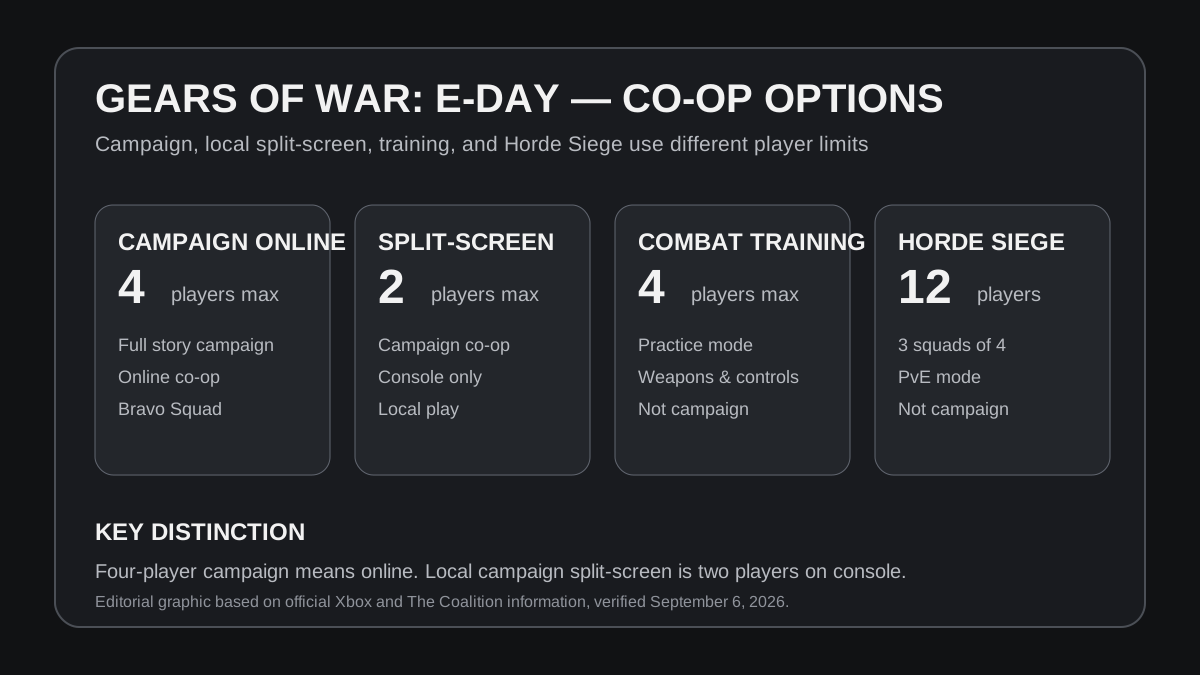
Gears of War: E-Day supports different player counts depending on the mode. The campaign can be played solo, with two players in console split-screen, or with up to four players online. Horde Siege is the largest confirmed mode at 12 players total, organized as three separate four-player COG squads on one shared battlefield. Versus is built entirely around 4v4 matches, so each PvP game has eight players total.
The Xbox Store also gives a useful top-level capability range: Xbox local co-op 2-2, Xbox local multiplayer 2-2, online co-op 2-4, and online multiplayer 2-12. Those ranges are not separate game modes; they summarize the player-count boundaries across E-Day's features.
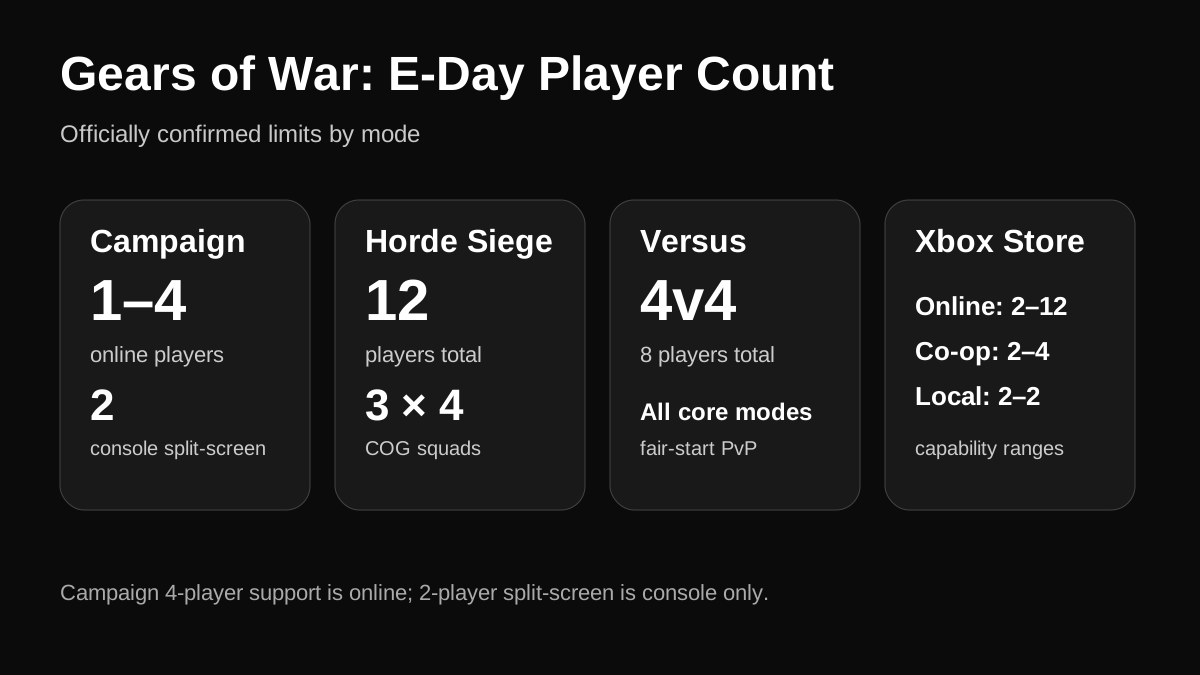
Gears E-Day player count at a glance
| Mode or feature | Confirmed player count | Important detail |
|---|---|---|
| Campaign solo | 1 | The full story can be played alone. |
| Campaign online co-op | 2-4 | Up to four players can play the campaign online. |
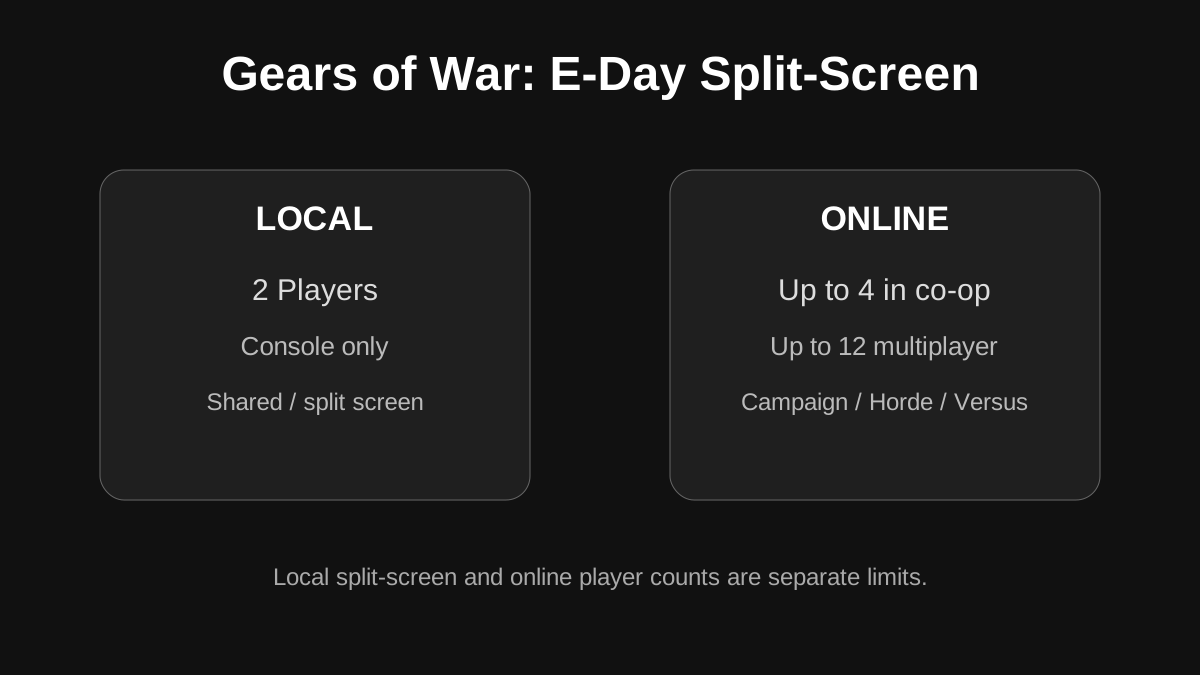
| Campaign split-screen | 2 | Console only. |
| Xbox local co-op capability | 2-2 | Official Xbox Store capability range. |
| Xbox local multiplayer capability | 2-2 | Official Xbox Store capability range. |
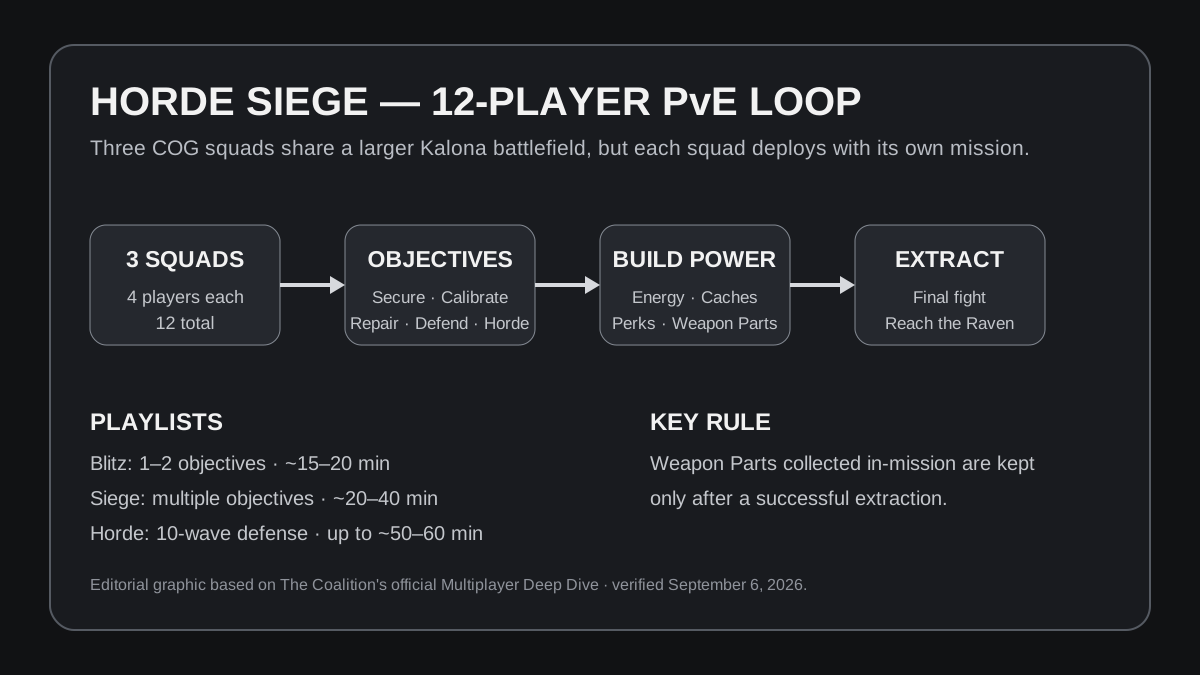
| Horde Siege | 12 total | Three four-player COG squads share the battlefield. |
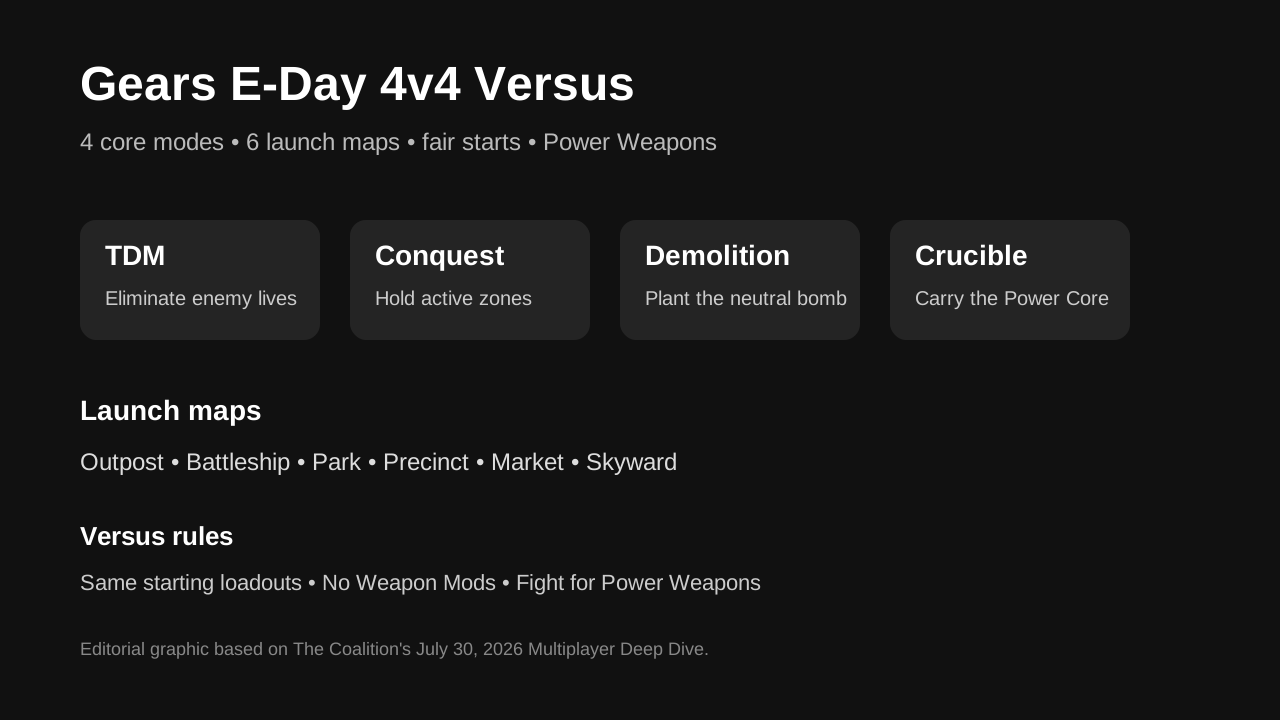
| Versus | 4v4 | Eight players total in every core Versus mode. |
| Combat Training | Up to 4 co-op | Practice space for learning weapons and multiplayer mechanics. |
| Xbox online co-op capability | 2-4 | Product-level co-op range. |
| Xbox online multiplayer capability | 2-12 | Product-level multiplayer range across modes. |
The biggest source of confusion is that 12-player Horde Siege does not mean you create one 12-person squad. The mode is built around three four-player squads. Each squad deploys with its own mission and can cross paths with the other squads as the larger battle develops.
How many players can play the Gears E-Day campaign?
The campaign supports one to four players, depending on how you play.
The Coalition has confirmed four playable members of Bravo Squad: Marcus Fenix, Dominic Santiago, Mags Carter, and Lucas Reyes. The entire campaign can be played online with four players, with each person controlling one member of the squad. You can also play alone, so a four-person party is optional rather than required.
For local co-op, the limit is lower. The official Xbox information explicitly states that two-player split-screen is available on console only. That means two people can share one Xbox Series X|S display, while three- or four-player campaign sessions should be planned as online co-op.
The important distinction is:
- 1 player: solo campaign;
- 2 players: online or console split-screen;
- 3 players: online campaign co-op;
- 4 players: online campaign co-op;
- 3-4 players on one console: not supported by the confirmed split-screen limit.
For the local-play details, see the Gears E-Day split-screen guide. The 4-player co-op guide goes deeper into Bravo Squad and online campaign co-op.
Is Gears E-Day four-player co-op?
Yes. The campaign is a four-player online co-op game, but that phrase should not be confused with local four-player play.
Xbox's official copy says players can battle alone, play side by side in two-player split-screen, or rally up to four players online. The campaign design supports the full Bravo Squad throughout the story, making four-player online co-op a core feature rather than a small side mode.
This also explains why “player count” cannot be answered with one number. E-Day can be a single-player campaign, a two-player couch co-op game, a four-player online campaign, an eight-player PvP game, or a 12-player PvE game depending on what you launch.
How many players are in Horde Siege?
Horde Siege supports 12 players total. This is the largest confirmed E-Day mode.
The Coalition describes Horde Siege as an evolution of classic Gears Horde. Instead of one small squad defending a single position, the mode uses three COG squads of four players each. All three squads fight on a larger Kalona battlefield, but each squad deploys with its own mission.
The structure therefore looks like this:
Squad A: 4 players + Squad B: 4 players + Squad C: 4 players = 12 players total.
The squads can cross paths, help one another, encounter world events, and affect the shared battle. Equipment or fortifications created by one squad may still matter after that squad moves elsewhere or extracts.
This design is why the Xbox Store lists online multiplayer up to 12 players even though the normal squad size is four. The maximum number refers to the entire Horde Siege battle, not the number of people inside one standard squad.
For the full PvE structure, see the Horde Siege guide and the Gears E-Day classes guide.
How many players are in Gears E-Day Versus?
Every confirmed E-Day Versus mode is 4v4, which means eight players total.
The Coalition specifically says all Versus modes are designed around four-player teams, fair starts, and balanced gameplay. Both teams begin with the same loadout weapons and equipment, and Weapon Mods are disabled. Players compete for Power Weapons and map control instead of bringing Horde-style progression advantages into PvP.
The launch core modes are:
- Team Deathmatch;
- Conquest;
- Demolition; and
- Crucible.
All four use the same 4v4 foundation. Ranked and Social are playlist structures around that multiplayer format rather than separate larger team sizes.
If you are specifically interested in PvP, the Gears E-Day 4v4 guide covers the six launch maps, mode rules, Power Weapons, and fair-start design.
Why does the Xbox Store say online multiplayer is 2-12?
The Xbox Store capability listing says Online multiplayer (2-12) because the game contains several online formats with different maximums.
It does not mean every playlist dynamically supports anything from two to twelve players. Instead, it summarizes the game's multiplayer range:
- a small online co-op party can begin at two players;
- campaign online co-op scales up to four;
- Versus normally uses eight total players in 4v4;
- Horde Siege reaches the maximum of 12.
The same logic applies to Online co-op (2-4). That range matches the standard cooperative squad size, while Horde Siege places multiple four-player squads together on the same battlefield.
This distinction matters when organizing a group. If you have six friends, for example, that does not mean all six can enter one campaign squad. Campaign stops at four. A larger group would need Horde Siege or separate sessions.
How many players can play locally?
Xbox currently lists both local co-op (2-2) and local multiplayer (2-2), while the official E-Day product description explicitly says two-player split-screen is console only.
The safest interpretation is that local play tops out at two players on supported consoles. There is no official four-player local campaign option, and PC split-screen is not confirmed.
The store's local multiplayer capability does not automatically prove that every Versus playlist supports every split-screen configuration. It establishes the product-level capability, while mode-specific local rules may still need launch documentation.
Does Combat Training support four players?
Yes. Combat Training is a separate practice mode that supports four-player co-op. It expands beyond the short Boot Camp tutorial by placing players on a multiplayer map where they can test weapons and spawn short Locust encounters.
This does not change the player counts for Campaign, Horde Siege, or Versus. It is best understood as a practice option for a normal four-player squad.
Can local and online players be mixed?
The official material clearly confirms two-player console split-screen and up to four-player online campaign co-op, but it does not publish a complete matrix for every hybrid party configuration.
For example, the public information checked here does not clearly state whether two split-screen players on one console can join two remote players for a four-player campaign session. That setup may be possible, but it should not be presented as confirmed until Xbox or The Coalition documents it explicitly.
The same caution applies to local multiplayer inside every Versus playlist. Product-level capabilities are useful, but mode-by-mode party rules are more specific.
Does crossplay change the player limit?
No. Crossplay changes which platforms can fill the available player slots, not how many slots exist.
Xbox lists cross-platform multiplayer and cross-platform co-op, and official beta documentation confirms cross-platform squad invitations involving Steam through Xbox account linking. A cross-platform Campaign squad is still limited to four online players; a Versus match remains 4v4; Horde Siege still has 12 total players.
See the Gears E-Day crossplay guide for the platform details.
Gears E-Day player-count FAQ
What is the maximum player count in Gears E-Day?
The maximum confirmed count in a single activity is 12 players in Horde Siege.
How many players can play the campaign?
The campaign supports one player solo or up to four players online. Console split-screen supports two players.
Is Gears E-Day 4-player split-screen?
No. The confirmed split-screen limit is two players on console. Four-player campaign support refers to online co-op.
Is Horde Siege a 12-player squad?
No. Horde Siege has 12 players total across three four-player squads.
How many players are in Versus?
Versus is 4v4, meaning eight players total.
Why does Xbox list online multiplayer as 2-12?
Because that product-level capability covers several modes with different player counts, from smaller cooperative sessions up to 12-player Horde Siege.
Bottom line
The easiest way to remember the Gears E-Day player count is 4 / 12 / 8: Campaign supports up to four online players, Horde Siege supports 12 players total, and Versus is 4v4 for eight total players. Add a separate local rule: console split-screen is limited to two players.
If you are organizing a group, think in terms of mode first. A four-person group can play the campaign or form one Horde Siege squad. Eight players fit a complete Versus lobby. Twelve players fill a full Horde Siege battlefield across three squads. The Xbox Store's 2-12 multiplayer range summarizes those formats; it does not mean every mode accepts every party size between those numbers.