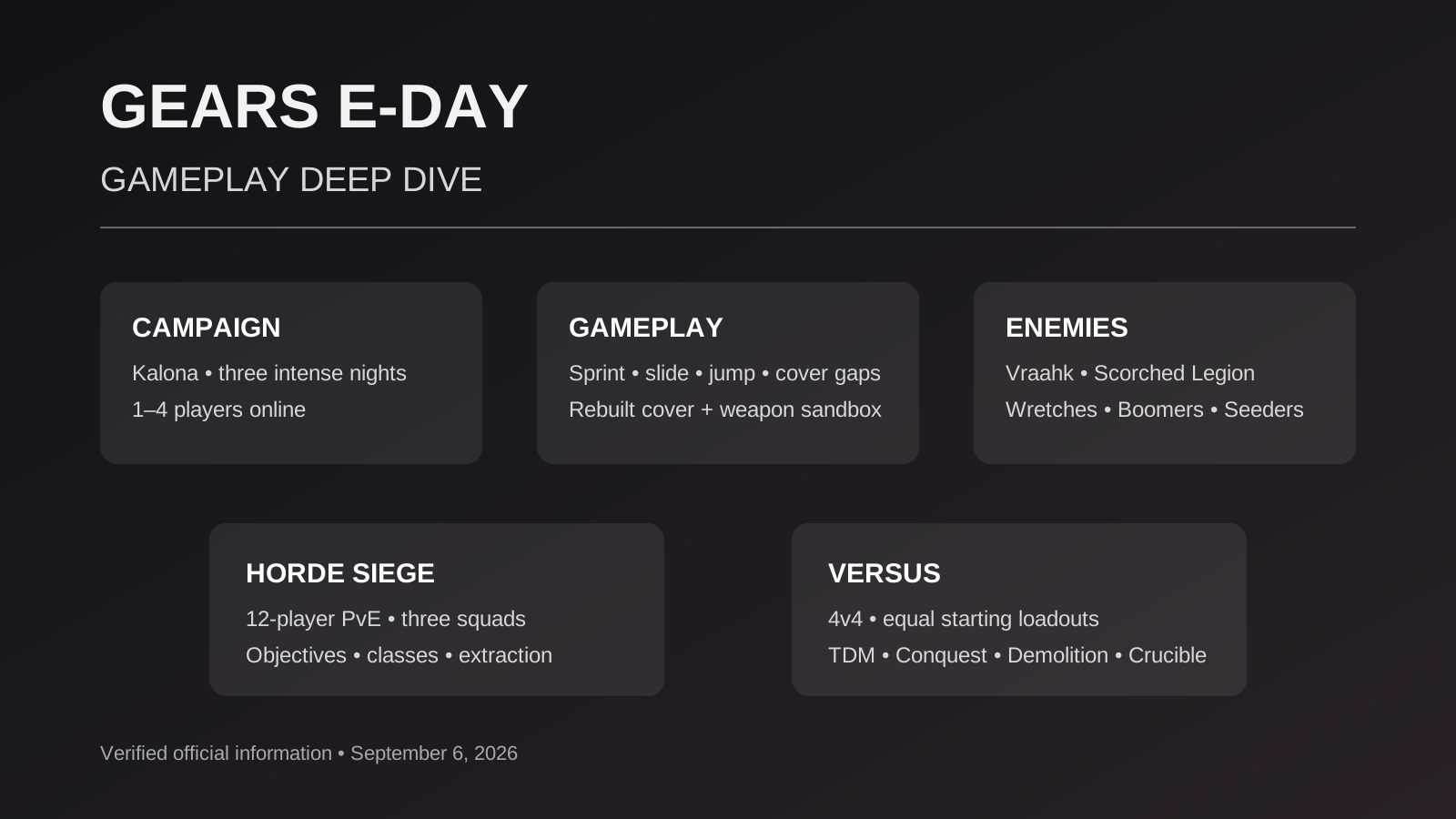
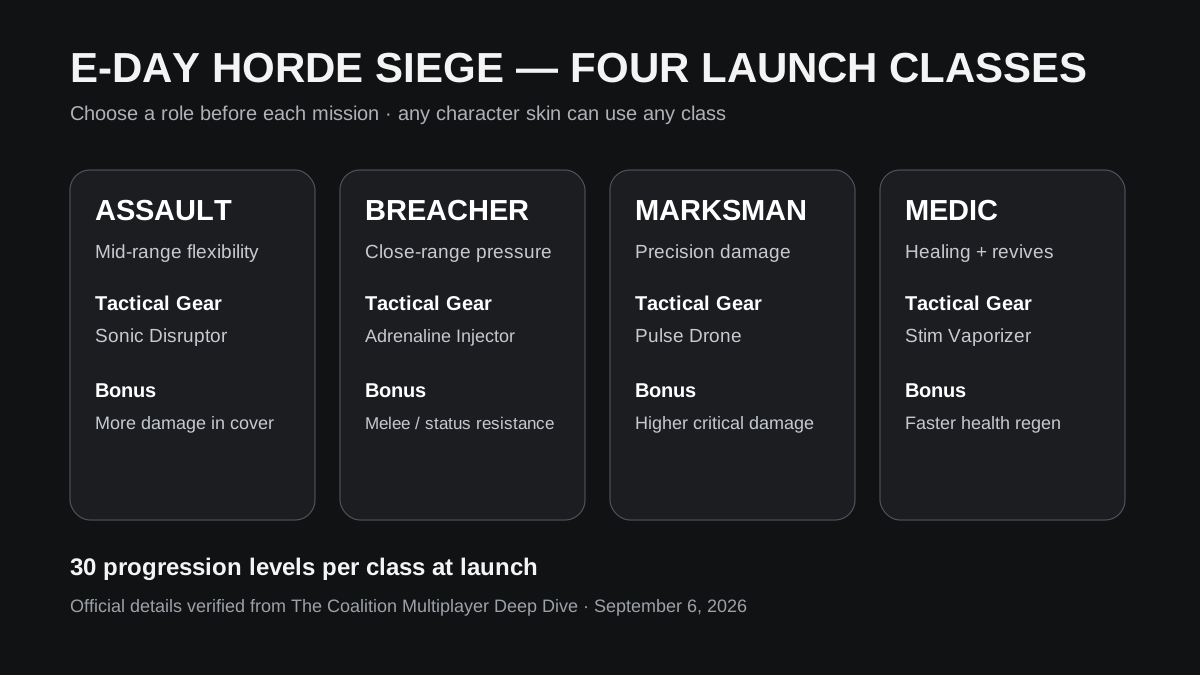
Gears E-Day launches Horde Siege with four confirmed classes: Assault, Breacher, Marksman, and Medic. Each class has its own starting loadout, combat bonus, Tactical Gear ability, and 30-level progression track. The system belongs to Horde Siege, not Versus: competitive 4v4 uses equal starting loadouts and disables Weapon Mods.
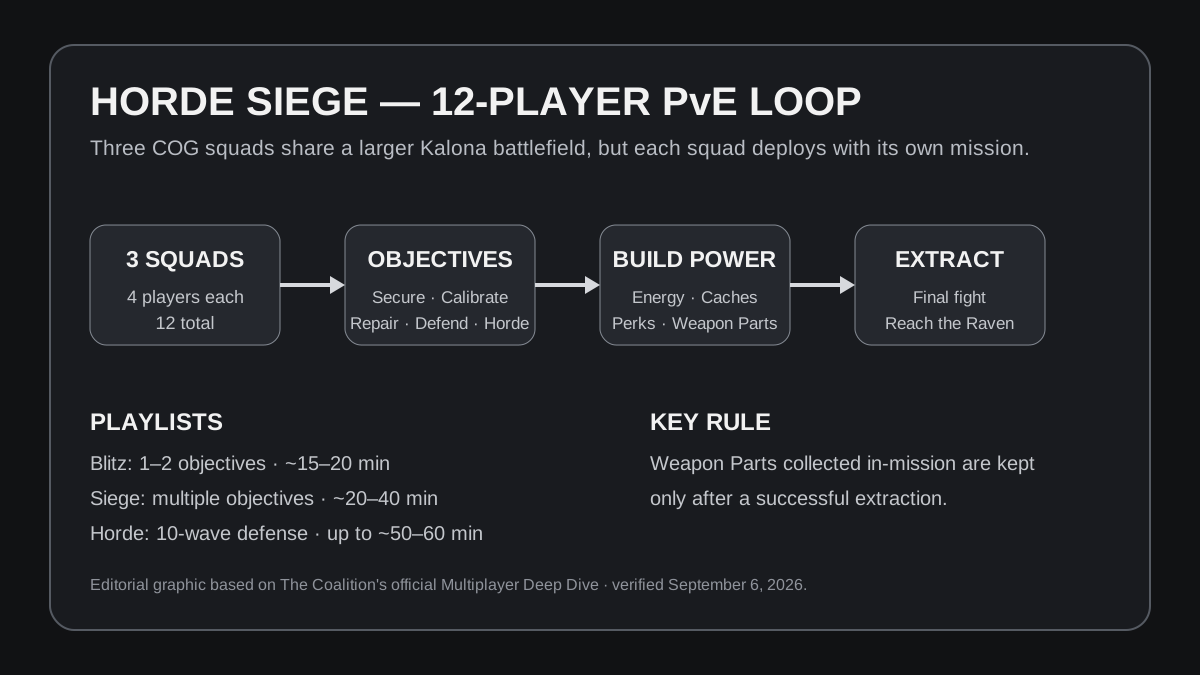
That distinction is the most important thing to understand before comparing builds. Horde Siege is a 12-player PvE mode built around three squads of four. Your class affects how your four-player squad survives objectives, earns resources, unlocks mods, and handles higher difficulties. The official multiplayer deep dive also says more Horde Siege classes will arrive through seasonal updates after launch.
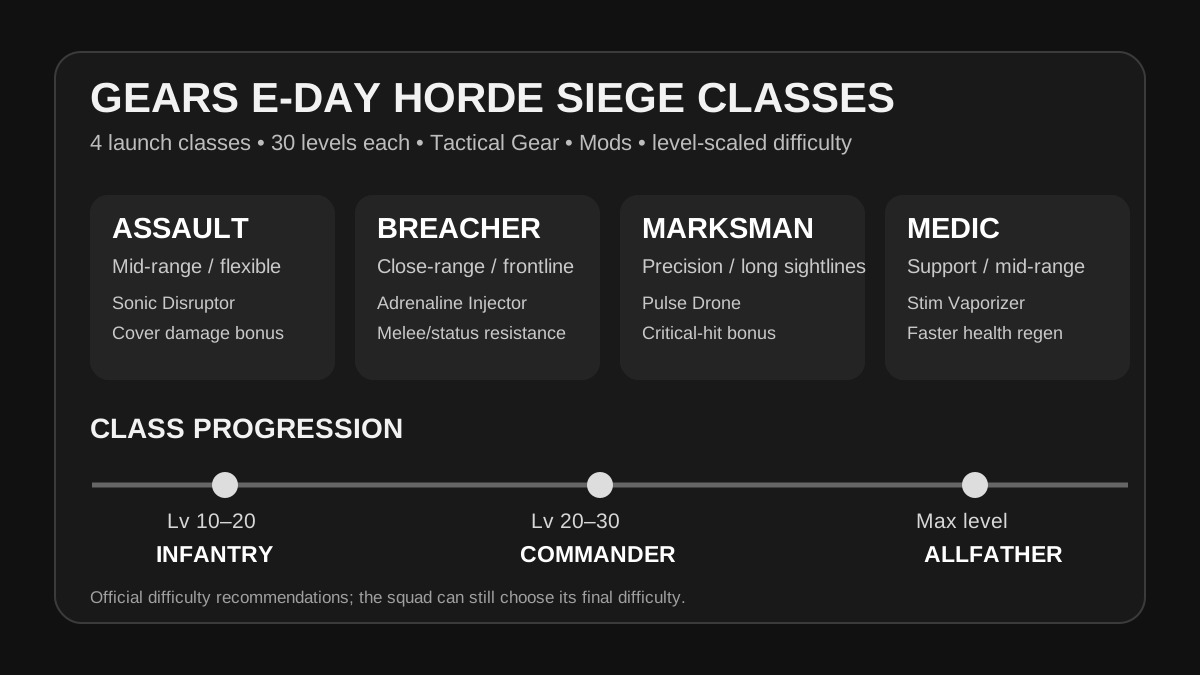
Gears E-Day classes at a glance
| Class | Core role | Tactical Gear | Confirmed bonus |
|---|---|---|---|
| Assault | Flexible mid-range damage | Sonic Disruptor | Increased damage while in cover |
| Breacher | Close-range frontline pressure | Adrenaline Injector | Better resistance to status effects and melee damage |
| Marksman | Precision damage at longer range | Pulse Drone | Increased critical-hit damage |
| Medic | Healing, revives, mid-range support | Stim Vaporizer | Faster health regeneration |
The game does not force one of each class into every squad. The Coalition explicitly says there is no single correct composition and even uses four Breachers as an example of a legal setup. That means class choice is about the mission, the squad's preferred range, and the build you have progressed—not a rigid tank/healer/DPS requirement.
How the Horde Siege class system works
Before every Horde Siege mission, you select a class. That choice defines four major parts of your build:
- your starting loadout;
- your passive combat bonus;
- your Tactical Gear ability with a timed cooldown; and
- your class progression track.
Character appearance is separate. Any class can be combined with any compatible character skin, so choosing Medic does not force a specific hero and choosing Marcus does not lock you into Assault.
Every class has 30 progression levels at launch. Completing missions earns Class XP for the class you are currently using. As the track advances, it unlocks new loadout weapons and equipment, Armor Mods, Tactical Gear Mods, and unique Weapon Mods. At key milestones, the class also receives base health and damage increases.
This creates a real difference between a fresh level-one class and a class that has been developed for difficult missions. A new player can understand the role immediately, but the full build only opens as the class gains levels and mod options.
Assault class
Assault is the most straightforward flexible damage class. The official description focuses on mid-range weapons and the ability to adapt to many situations. Its Tactical Gear, the Sonic Disruptor, stuns incoming enemies and is especially useful while defending an objective.
Assault also gains increased damage while fighting from cover. That bonus matches the basic rhythm of Gears combat: hold a strong position, punish enemies as they enter the lane, then reposition when the objective moves.
Assault is a strong starting point if you want to learn Horde Siege without specializing too heavily. It can contribute to defense, general firefights, and objective pushes without requiring the close-range commitment of Breacher or the sightline dependence of Marksman.
Choose Assault when your squad needs consistent mid-range pressure, when the mission has a defense phase, or when you want a class that rewards classic cover discipline.
Breacher class
Breacher is the close-range aggression class. Its loadout is built around pushing into dangerous spaces, while the Adrenaline Injector restores health and reduces incoming damage. That gives the class a temporary survival tool for high-risk frontline plays.
Breacher also has improved resistance to status effects and melee damage. Those bonuses are not random defensive perks—they support the same role. The class is meant to operate where Locust pressure is highest, clear tight positions, and create openings for the rest of the squad.
Breacher is especially appealing on objectives that force players into confined streets, interiors, or crowded enemy positions. The trade-off is obvious: the closer you play, the more often bad positioning can punish you.
Because duplicate classes are allowed, an aggressive squad can stack Breachers. That may produce strong close-range pressure, but it also gives up some of the long-range tagging, cover damage, and revive utility that Marksman, Assault, and Medic provide.
Marksman class
Marksman is built around precision and longer sightlines. Its Pulse Drone tags Locust units for the squad, while the class receives increased critical-hit damage.
That makes Marksman valuable for target identification and deliberate removal of priority threats. Horde Siege's larger maps give the class room to work, particularly when your squad can hold a stable lane while the Marksman picks targets apart.
The class is less comfortable when the fight collapses into constant close-range pressure. It performs best when the player can create distance, recognize important enemies, and use the team's frontline to preserve firing angles.
Choose Marksman if you enjoy precision weapons, if your squad needs help identifying threats, or if the mission layout gives you long streets and elevated lines of fire.
Medic class
Medic is the dedicated recovery class without being a passive healer. The official material describes it as a versatile mid-range fighter with faster health regeneration. Its Stim Vaporizer heals and revives any Gear within range, including downed soldiers from other squads.
That last detail matters because Horde Siege is not isolated four-player PvE. Three squads share the battlefield, and Medic can help stabilize players outside its own squad when the fight converges.
Medic is useful when your team is learning a difficult mission, when revives are repeatedly breaking your formation, or when you want support utility without giving up mid-range combat capability.
The ability still depends on positioning. A Medic that is too far away from the downed players cannot convert its support advantage into a revive, so squad spacing matters.
Tactical Gear and Mods
Each class's Tactical Gear is one of the biggest reasons classes feel different. The base ability gives the class its signature active tool, while Tactical Gear Mods can improve properties such as cooldown, range, or additional effects.
Armor Mods affect the soldier more broadly. The Coalition gives examples including health, ammunition reserves, weapon-swap speed, and special benefits such as gaining Perfect Active ammo from executions.
Weapon Mods sit beside those systems. Some make small tactical adjustments; others can change a weapon's functionality. The official deep dive uses one intentionally extreme example: attaching a bayonet to the Gnasher.
Once a Weapon Mod has been unlocked on a class track, it must be purchased using Weapon Parts before it can be equipped. Weapon Parts found during Horde Siege only remain yours if the squad successfully extracts and completes the mission.
For a dedicated breakdown of that system, see the Gears E-Day weapons guide.
Weapon customization is shared across classes
Class progression and weapon customization overlap, but they are not identical systems. Weapon customization is shared across classes.
If you customize a Prototype Lancer while playing Assault, those mods and cosmetics carry with that weapon when it is equipped by another class. This prevents players from having to rebuild the same weapon separately for every role.
Class-specific progression still matters because different class tracks determine when loadout items and mod opportunities unlock. The shared weapon layer simply means your investment in a particular weapon can remain useful as you experiment with other classes.
Gears E-Day class levels and Horde Siege difficulty
One of the most important details missing from many early class guides is that Horde Siege difficulty is tied to class progression recommendations. The game will suggest a difficulty based on your selected class level, although the final choice remains with the squad.
The official recommendations are:
| Difficulty | Recommended class level | What it means |
|---|---|---|
| Infantry | 10–20 | Intended for experienced players ready for a meaningful challenge |
| Commander | 20–30 | Built for highly developed classes and squads with successful missions behind them |
| Allfather | Max level | Designed around an extremely low survival expectation even for fully developed classes |
Harder missions provide increased rewards. This creates a natural progression loop: level a class, unlock stronger build options, take on harder missions, then use the additional rewards to improve your loadout further.
It also means a class guide should not treat difficulty as completely separate from progression. A level-five Medic and a max-level Medic share the same role identity, but they do not have the same health, damage milestones, mod selection, or recommended difficulty ceiling.
What happens before level 10?
The official deep dive publishes recommendations for Infantry beginning at class level 10 but does not present the full lower-tier difficulty chart in the same section. It is therefore safer not to invent a named level-one difficulty or claim a specific beginner bracket that the source does not list.
The useful conclusion is simply that Horde Siege recommends difficulty based on class level, and the published higher tiers begin at Infantry for levels 10–20.
Are classes used in Versus?
No Horde Siege-style class system is confirmed for Versus. The official multiplayer deep dive deliberately separates the modes.
Versus is 4v4, every player begins with the same loadout weapons and equipment, and Weapon Mods are disabled. Teams gain advantages by controlling Power Weapons on the map rather than by bringing leveled Horde Siege builds into PvP.
That makes the design boundary very clear:
- Horde Siege: classes, class XP, Tactical Gear, Armor Mods, Tactical Gear Mods, Weapon Mods and PvE difficulty progression.
- Versus: equal starts, no Weapon Mods, Power Weapons and player skill.
Do not assume your level-30 Breacher bonuses carry into Ranked or Social Versus.
Which Gears E-Day class is best?
There is no official best class, and the system is designed to discourage one universal answer.
A practical starting recommendation is:
- Assault: easiest general-purpose entry point for cover-focused players.
- Breacher: best fit for players who actively seek close-range fights.
- Marksman: best fit for precision players who value sightlines and critical hits.
- Medic: best fit for players who want revive utility and squad stability.
The strongest class can change with the mission. A defense objective may make Assault's Sonic Disruptor especially useful; a dangerous close-quarters push may reward Breacher; an open district may favor Marksman; a mission with repeated downs may make Medic invaluable.
Because the game allows duplicate classes, experimentation matters more than forcing a textbook composition.
Gears E-Day classes FAQ
How many classes are in Gears E-Day at launch?
Four Horde Siege classes are confirmed for launch: Assault, Breacher, Marksman, and Medic. More classes are planned for seasonal updates.
How many levels does each class have?
Each launch class has 30 progression levels. Class XP unlocks equipment, Armor Mods, Tactical Gear Mods, Weapon Mods, and milestone health and damage increases.
Can a squad use duplicate classes?
Yes. There is no required one-of-each setup. The Coalition specifically says a squad can deploy with four Breachers if players want to.
What level should I be for Infantry difficulty?
The official recommendation is class level 10–20.
What level should I be for Commander difficulty?
Commander is recommended for class levels 20–30.
What level is Allfather difficulty for?
Allfather is recommended for max-level classes.
Do harder Horde Siege difficulties give better rewards?
Yes. The official deep dive says harder missions provide increased rewards.
Are classes tied to character skins?
No. Classes can be combined with any compatible character skin, separating appearance from combat role.
Are Horde Siege classes used in Versus?
No. Versus uses equal starting equipment and disables Weapon Mods; the announced class progression system is for Horde Siege.
Bottom line
Assault, Breacher, Marksman, and Medic form the launch class foundation of Gears E-Day's Horde Siege. Each has a distinct Tactical Gear ability, passive combat advantage, loadout identity, and 30-level progression track. The system becomes more important as difficulty rises because Infantry, Commander, and Allfather are explicitly recommended for increasingly developed classes.
Start with the role that matches how you naturally fight, then use Class XP, Armor Mods, Tactical Gear Mods, and shared weapon customization to specialize it. Horde Siege rewards developed builds and squad coordination, but it does not force one composition—and none of that class progression should be confused with the equal-start design of Versus.