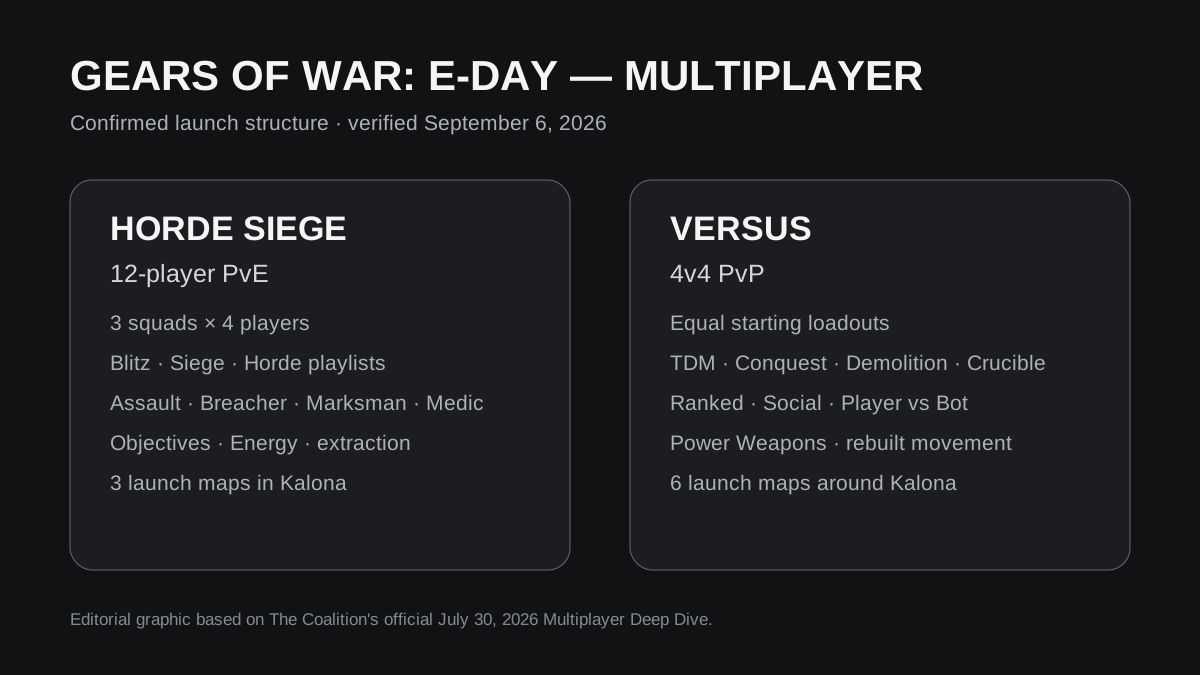
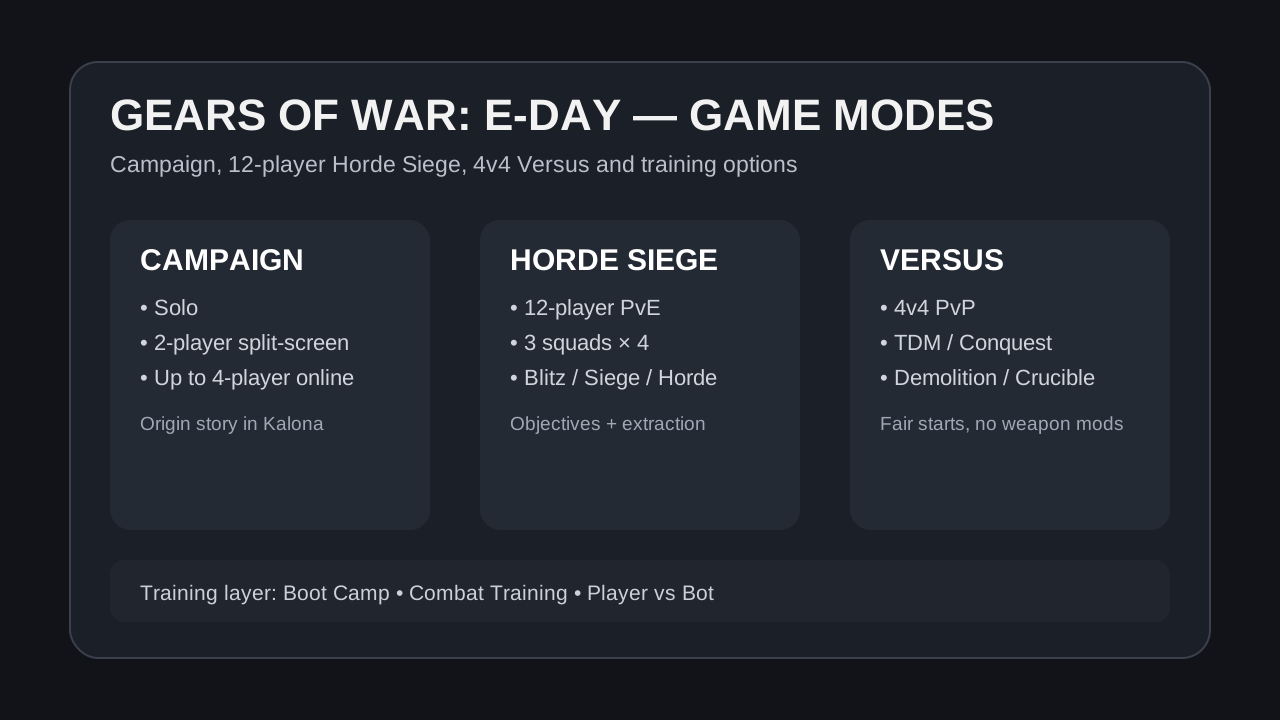
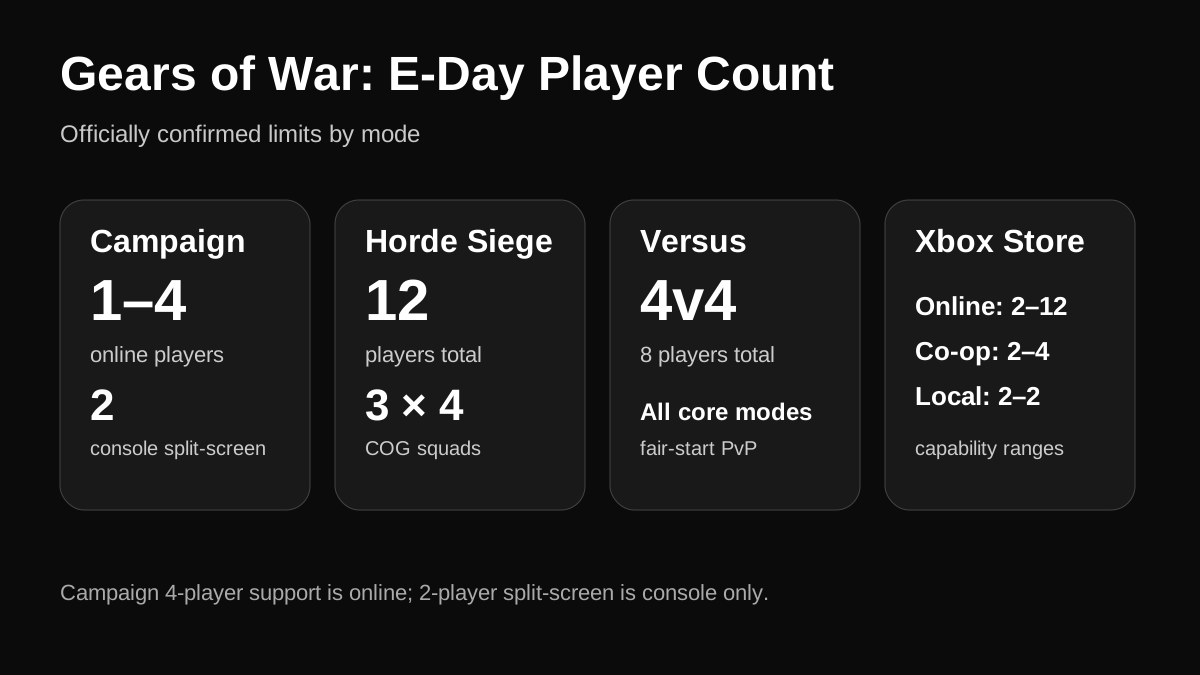
Gears E-Day 4v4 is the full Versus PvP format at launch. Every confirmed core Versus mode is built for two teams of four, all players begin with the same baseline loadout weapons and equipment, and Weapon Mods are disabled in Versus. The competitive edge comes from movement, cover control, teamwork, objective execution, and fighting for Power Weapons placed on each map.
The Coalition has confirmed four core launch modes—Team Deathmatch, Conquest, Demolition, and Crucible—plus six brand-new launch maps: Outpost, Battleship, Park, Precinct, Market, and Skyward. Ranked and Social playlist structures sit above those modes, while Player vs Bot and Combat Training give players lower-pressure ways to learn the same maps and systems.
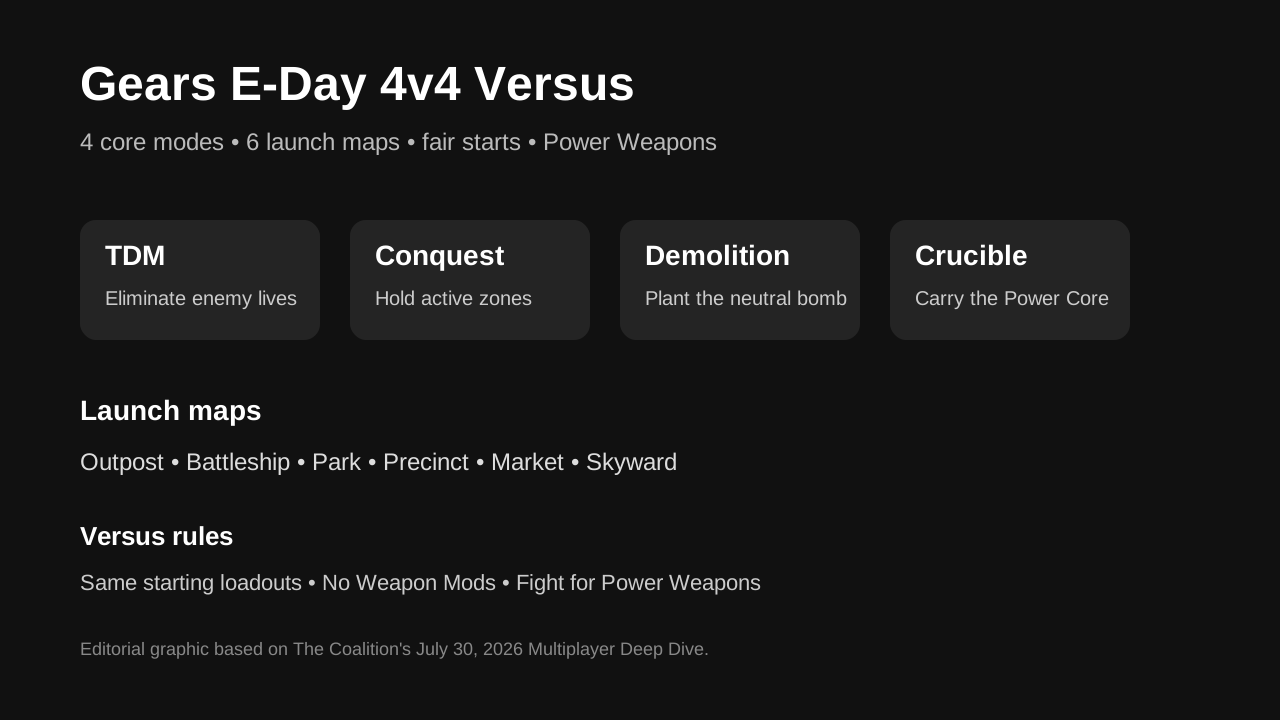
How Gears E-Day 4v4 works
The most important rule is the fair start. In Horde Siege, players can develop classes, Weapon Mods, Armor Mods, Tactical Gear and persistent PvE progression. Versus deliberately strips those advantages away. All players start the match with the same loadout weapons and equipment, and there are no Weapon Mods.
That does not mean every player has identical options for the whole match. Power Weapons are placed around the map, creating temporary advantages that teams must earn by controlling routes and winning the fight around the pickup. The design pushes skill away from pre-match build optimization and toward map knowledge, timing, aim, movement and team decisions.
This distinction also prevents a common misconception: Horde Siege classes such as Assault, Breacher, Marksman and Medic are not confirmed Versus classes. Character skins can be used for identity and customization, but PvP starts from equal gameplay footing.
For the broader multiplayer structure, see the Gears E-Day multiplayer guide and game modes hub.
The four core launch modes
Team Deathmatch
Team Deathmatch remains the most direct mode for learning E-Day's basic 4v4 combat loop. Teams are trying to eliminate the opposing side's pool of lives rather than race to a conventional score target.
E-Day adds a dynamic respawn system that can move spawn locations in response to where the fight is happening. That matters because memorizing one fixed enemy spawn will not be enough. Teams need to keep reading the battlefield and account for the fact that the next wave of opponents may enter from a different angle as pressure shifts around the map.
TDM is the simplest mode to understand, but not necessarily the easiest to master. Throwing away one isolated life can matter more than missing an objective tick because the mode is directly built around limited team lives.
Conquest
Conquest takes the familiar King of the Hill idea and changes how the active zone behaves. Instead of rotating on a simple fixed timer, the zone stays active until one team accumulates enough time inside it to score.
That changes the rhythm. A team cannot always abandon a difficult hill and wait for the next rotation. If the opponent has control, you may need to break the setup before they finish the scoring threshold. Teams that coordinate pushes, watch flanks and control Power Weapon routes around the hill should have a large advantage over players who simply run into the objective one at a time.
Demolition
Demolition is the most structured attack-and-defense mode in the launch list. Both teams fight over a neutral bomb, then try to carry it to one of two enemy bombsites.
Once planted, the planting team has to defend the bomb until detonation while fighting without respawns during that stage. Three successful detonations win the match.
This creates several layers of decision-making: who takes the bomb, which site is safer, whether to fake one route before rotating, when to commit, and whether the defending team should contest early or fall back around the bombsite. A mechanically strong squad can still lose if it repeatedly gives up the neutral bomb or plants without enough players alive to defend it.
Crucible
Crucible is the new core Versus mode. Teams carry a Power Core into a scoring zone while the zone moves and shrinks over the course of the round.
The Core is not just a passive objective item. It stores an electrical charge that can help the carrier's team repel attackers. That makes the carrier part scorer and part tactical tool, while the rest of the squad has to protect routes into the shrinking zone.
The moving objective also means static map control is not enough. Good teams need to transition together rather than winning one fight and staying in the same position indefinitely.
All six Gears E-Day launch Versus maps
The Coalition says all six launch maps are brand-new and set in and around war-torn Kalona. They use symmetrical foundations inspired by classic Gears map design, with a focus on cover positions, fronts and lanes, but they are also built around E-Day's new movement sandbox.
Outpost
Outpost is an abandoned military camp overlooking Downtown Kalona. It combines bunkers, rolling terrain, an elevated bridge, multiple traversal routes and long sightlines.
That mix should create a map where long-range control and aggressive rotations can both matter. Elevated sightlines may reward a team that establishes map control early, but multiple routes can punish a squad that watches only one lane.
Battleship
Battleship takes place on and around a colossal wartime vessel being dismantled after the Pendulum Wars. Players fight across exposed decks, bridge crossings and smoldering docks.
The map description emphasizes key pathways, making bridge and lane control especially important. Narrow crossings can become natural points for Power Weapon fights, coordinated pushes or grenades.
Park
Park is set in the ruined zoo area along the coast of Downtown Kalona. Open sightlines converge on a central fountain, while paths and exhibits provide alternate approaches around the battlefield.
The design suggests a clear central contest with enough side routes to discourage a team from locking its camera on one lane. It should be particularly important to know whether an opponent is challenging through the open center or rotating through the zoo exhibits.
Precinct
Precinct is the Kalona Police Department after its destruction. Tight interiors, breached walls and improvised cover make it the clearest close-quarters map in the confirmed launch pool.
That does not mean every fight will be shotgun-only, but the official description strongly emphasizes flanks and confined engagements. Teams that understand interior shortcuts and wall openings should be able to pressure opponents who hold one room too passively.
Market
Market uses a destroyed seaside market with long streets, elevated balconies and densely packed interiors.
This creates layered combat: ground-level street fights, balcony pressure and interior flanks can happen in the same engagement. The map should reward teams that track enemy elevation rather than reading the battlefield as a flat two-lane layout.
Skyward
Skyward is the most movement-focused map in the launch list. It is built around interconnected rooftops, narrow pathways, exposed crossings and jumps between elevated positions.
The map directly showcases E-Day's new traversal mechanics. High ground can provide strong sightlines, but the routes leading there are risky and exposed. It is a clear example of The Coalition's risk-reward approach to jumping and vertical movement.
For the underlying movement changes, use the Gears E-Day movement guide.
Ranked vs Social
Versus is not just a list of game modes. The official multiplayer structure also divides play into Ranked and Social experiences.
Ranked uses a competitive Skill Division system. The number of ranking points you can gain or lose depends on your division, with higher competitive levels carrying greater stakes.
Social is broader and more flexible. Confirmed examples include 4v4 Quickplay, Player vs Bot, rotating featured experiences and limited-time events. After Social matches, players can vote on what to play next, allowing lobbies to remain together.
This makes Social the better place to learn maps or modes without immediately tying every result to ranked progression.
Power Weapons matter more because everyone starts equal
Power Weapon control is one of the defining strategic layers in E-Day Versus. Because players cannot bring Horde-style Weapon Mods into PvP, map pickups become a primary way to create a temporary equipment advantage.
A strong team should treat each Power Weapon as a small objective. It is rarely worth sending one player alone into an obvious pickup if the enemy has better angles. Instead, teams can pressure the route, force opponents into cover, and claim the weapon after winning the surrounding space.
The exact Power Weapon placement for every map and playlist is not completely documented in the official launch overview, so this guide does not invent spawn charts or timers.
How E-Day movement changes 4v4
The Gameplay Updates make clear that the PvP sandbox is not simply old Gears movement placed on new maps. E-Day adds or changes sprint camera behavior, sliding, jumping, climbing, more flexible cover traversal and cover-cancel rules.
Versus maps were specifically designed to create risk-reward opportunities around those mechanics. Skyward is the most obvious example, but elevated paths, breached walls, variable cover height and alternate traversal routes appear throughout the launch map descriptions.
That means map knowledge will include more than memorizing weapon positions. Players will also need to understand where a jump creates a faster flank, where a slide exposes them, and which cover route can be canceled or escaped safely.
How to practice 4v4 before Ranked
E-Day provides several official practice routes. Boot Camp introduces controls and mechanics. Combat Training expands into a multiplayer map where players can test weapons and spawn short Locust encounters, and it supports four-player co-op. Player vs Bot playlists let players learn real Versus maps and modes against bots at selectable difficulty levels.
A useful progression is Boot Camp first, Combat Training second, then Player vs Bot or Social Quickplay before Ranked. That gives players a chance to learn movement and map routes before ranking points are involved.
Gears E-Day 4v4 FAQ
Is every Gears E-Day Versus mode 4v4?
Yes. The Coalition states that all confirmed Versus modes are designed for 4v4.
What are the four launch Versus modes?
Team Deathmatch, Conquest, Demolition and Crucible.
How many Versus maps launch with Gears E-Day?
Six brand-new maps are confirmed for launch: Outpost, Battleship, Park, Precinct, Market and Skyward.
Are Weapon Mods enabled in Versus?
No. Weapon Mods are disabled, and all players begin with the same baseline loadout weapons and equipment.
Are Horde Siege classes used in Versus?
The confirmed Assault, Breacher, Marksman and Medic class system belongs to Horde Siege. The official Versus design instead emphasizes fair starts and equal equipment.
Does Gears E-Day have Ranked multiplayer?
Yes. Ranked is confirmed alongside Social playlists. Ranked uses a Skill Division structure where point gains and losses depend on competitive level.
Is 5v5 confirmed?
No. The current official launch information identifies Versus as 4v4. A 5v5 launch format has not been announced in the material verified here.
Bottom line
Gears E-Day 4v4 is a fair-start, map-control-focused version of classic Gears PvP. Players enter with equal equipment, fight over Power Weapons, and compete across Team Deathmatch, Conquest, Demolition and Crucible on six new Kalona maps. Ranked supports competitive progression, while Social, Player vs Bot, Boot Camp and Combat Training give players multiple ways to learn the sandbox first.
The most important change is not simply the shift to four-player teams. E-Day combines 4v4 with a rebuilt movement system and maps intentionally designed around new traversal options, so successful squads will need to learn routes, elevation and objective timing as carefully as weapon mechanics.