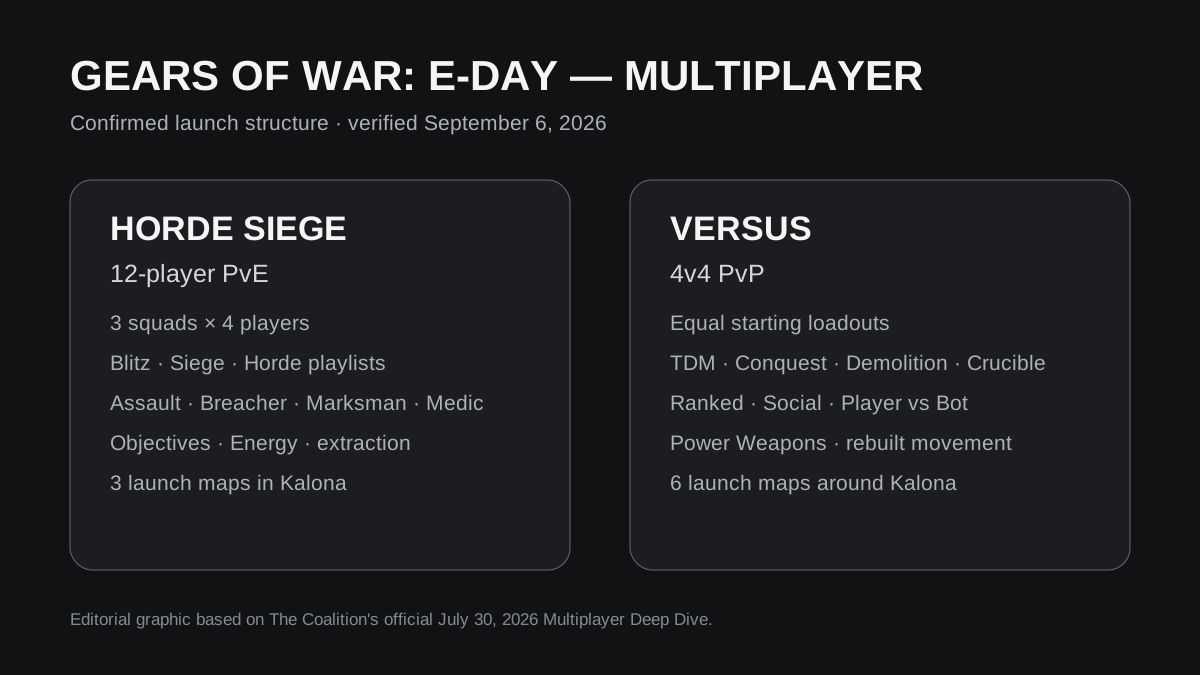
Gears of War: E-Day has three main playable pillars: Campaign, Horde Siege, and Versus. Campaign is the story mode and supports solo play, two-player split-screen on console, and up to four-player online co-op. Horde Siege is the new 12-player PvE mode built around three four-person COG squads. Versus is the competitive 4v4 PvP side of the game. Around those three pillars, E-Day also includes training and practice options such as Boot Camp, Combat Training, and Player vs Bot playlists.
That hierarchy matters because several names that appear in official marketing are not all equivalent “game modes.” Blitz, Siege, and Horde are playlists inside Horde Siege. Team Deathmatch, Conquest, Demolition, and Crucible are Versus modes. Boot Camp and Combat Training are practice spaces. This guide separates those layers so you can quickly understand what you are actually choosing from the menu.
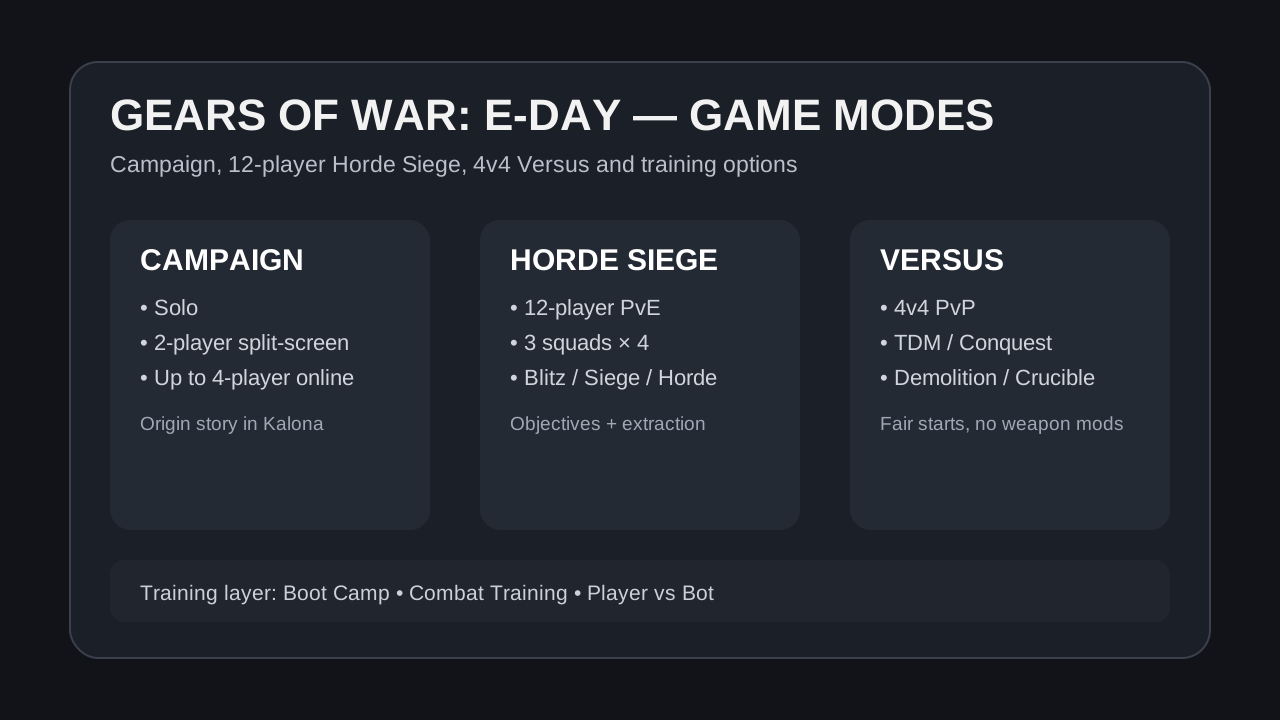
Gears E-Day game modes at a glance
| Category | Type | Confirmed player structure | What it is |
|---|---|---|---|
| Campaign | Story / PvE | Solo, 2-player console split-screen, up to 4-player online | Origin-story campaign set during Emergence Day |
| Horde Siege | Cooperative PvE | 12 players, organized as 3 squads of 4 | Large mission-based Locust battles with classes, objectives and extraction |
| Versus | Competitive PvP | 4v4 | Equal-start competitive modes built around teamplay and Power Weapons |
| Boot Camp | Training | Training course | Short introduction to controls and core mechanics |
| Combat Training | Practice | Supports 4-player co-op | Multiplayer-map practice with weapons and optional Locust encounters |
| Player vs Bot | Social practice | 4v4-style bot playlists | Learn multiplayer maps and modes against bots |
The first three rows are the main ways to experience E-Day. The remaining options exist to teach, practice, or reduce the pressure before you move into a full PvE or PvP match.
Campaign: solo, split-screen, or four-player online
The Campaign is a full top-level game mode and should be included in any complete E-Day mode list. Xbox describes it as the origin story of Emergence Day, centered on Marcus Fenix, Dominic Santiago, and Bravo Squad as Kalona collapses under the Locust invasion.
The confirmed player options are unusually broad for a modern story campaign:
- Solo campaign play.
- Two-player split-screen on console.
- Up to four-player online co-op.
The four-player structure is important because Bravo Squad is built around Marcus, Dom, Mags Carter, and Lucas Reyes. E-Day therefore supports a full online group throughout the campaign rather than limiting co-op to a separate mission list.
Do not confuse this with Horde Siege. Both are cooperative PvE experiences, but Campaign is a authored story with narrative progression, while Horde Siege is a replayable multiplayer system built around mission playlists, classes, changing objectives, resources, and extraction.
For the local and online player limits, see the Gears E-Day split-screen guide. For the story structure itself, use the Gears E-Day story guide.
Horde Siege: the 12-player PvE pillar
Horde Siege is E-Day's large-scale cooperative PvE mode. It is an evolution of classic Gears Horde, but the official design goes beyond standing in one arena for a fixed wave sequence.
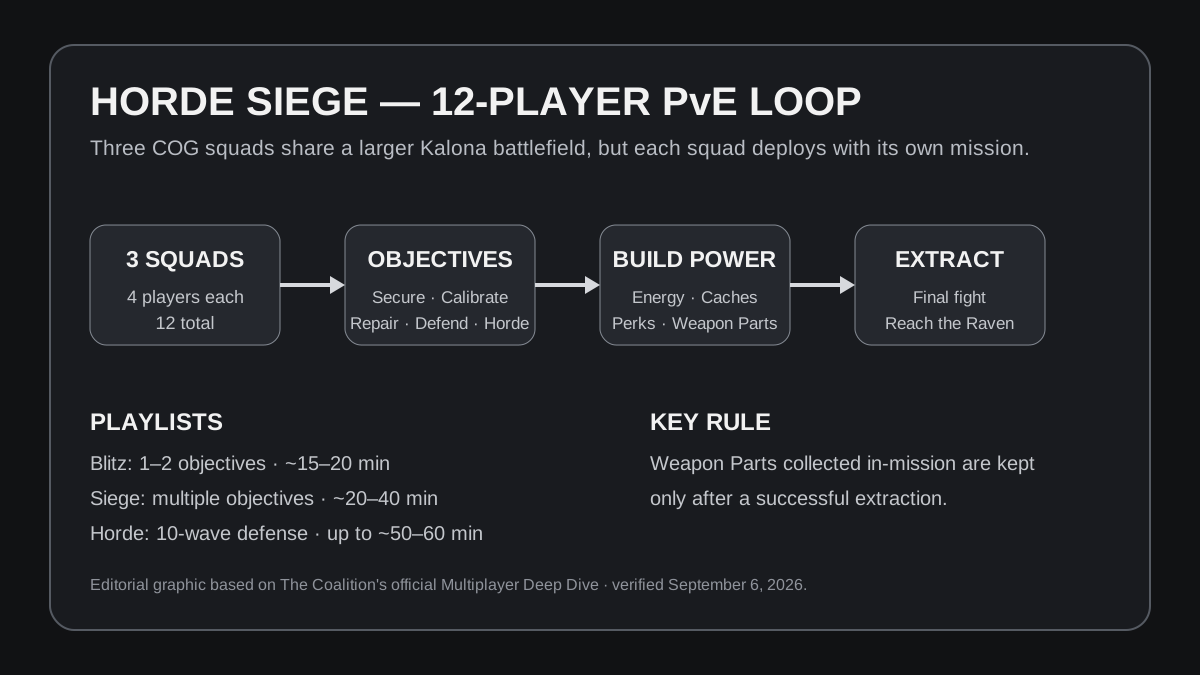
Twelve players enter the larger battlefield as three COG squads of four. Each squad has its own mission while sharing the same wider Kalona map. Squads can cross paths, respond to changing threats, find equipment or fortifications left behind by another team, and eventually work toward a final fight and extraction.
The maps themselves are significantly larger than traditional Horde spaces. The Coalition says each Horde Siege map spans multiple city blocks in Kalona, with more room for traversal, objectives, resources, and tactical routes.
Blitz, Siege and Horde are playlists, not separate top-level modes
The official Multiplayer Deep Dive organizes Horde Siege missions into three playlists:
| Playlist | Structure | Typical length |
|---|---|---|
| Blitz | 1–2 short objectives | About 15–20 minutes |
| Siege | Multiple objectives and more traversal | About 20–40 minutes |
| Horde | 10 increasingly difficult defensive waves | Up to about 50–60 minutes |
This is one of the easiest parts of the mode structure to misunderstand. If the menu says Blitz, Siege, or Horde, you are still playing Horde Siege; you are choosing the mission format and expected session length inside that PvE system.
Horde Siege objective types
The confirmed objective types are:
- Secure
- Calibrate
- Repair
- Defend
- Horde
Objectives can combine with mission type, difficulty, modifiers, map layout, and the actions of other squads. That is why two runs on the same map do not necessarily play the same way.
Horde Siege also includes the four launch classes—Assault, Breacher, Marksman, and Medic—plus class progression, Tactical Gear, Armor Mods, Weapon Mods, Weapon Parts, Energy, Supply Caches, COG Tags, and extraction. The dedicated Horde Siege guide explains those systems in full, while the classes guide focuses on role progression.
Versus: all core PvP modes are 4v4
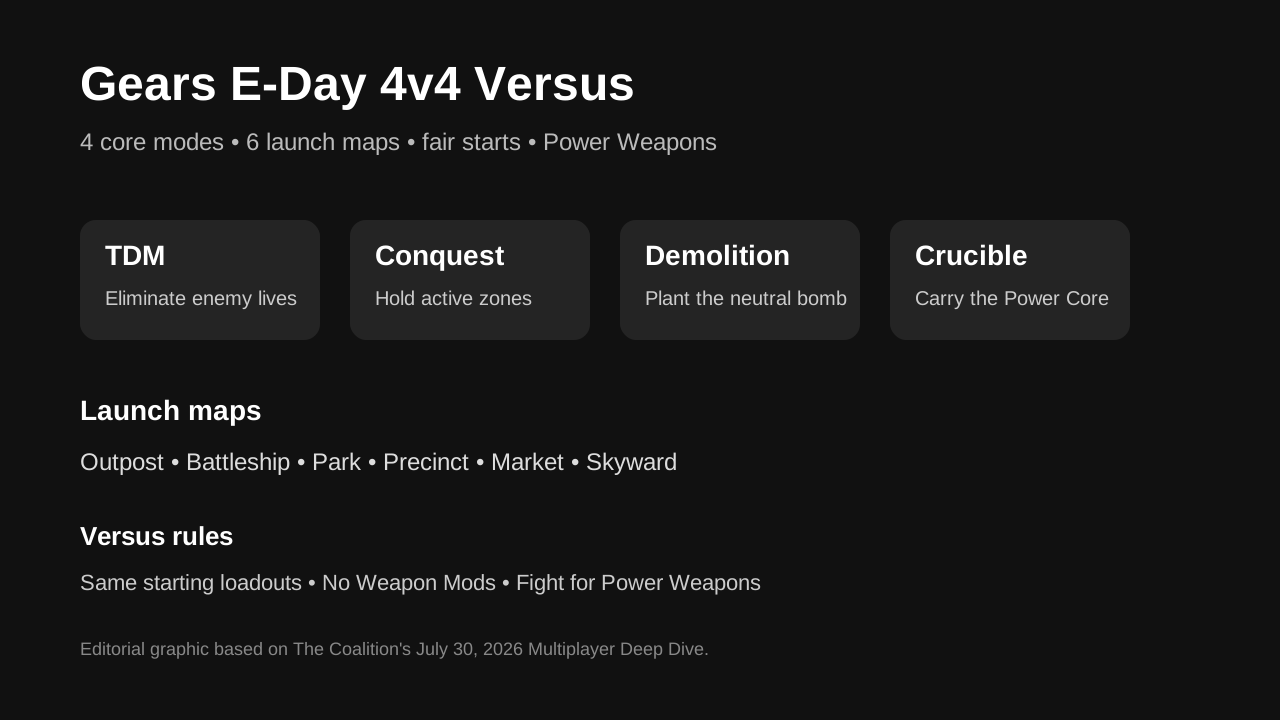
Versus is E-Day's competitive multiplayer pillar, and every confirmed core Versus mode is 4v4. The Coalition says players begin with equal loadout weapons and equipment, and Weapon Mods are disabled in Versus. Competitive advantage comes from positioning, execution, team coordination, and controlling Power Weapons placed on the map.
At launch, E-Day has four core Versus modes.
Team Deathmatch
Team Deathmatch returns with a shared-lives structure and dynamic respawns. As the fight moves around the map, spawn locations can shift to reduce obviously broken combat flow and keep the match moving.
The core goal remains straightforward: deplete the opposing team's available lives and win the fight.
Conquest
Conquest is an objective-control mode built around an active scoring zone. Unlike a simple fixed-rotation hill system, the zone remains active until a team earns enough control time to score.
That creates a longer tactical question around each position: contest immediately, regroup for a coordinated break, hold an angle on a Power Weapon, or give up some time to take a stronger team fight.
Demolition
Demolition revolves around a neutral bomb and two enemy bombsites. Teams fight for control of the bomb, carry it into enemy territory, plant it, and then defend the armed objective.
After a plant, the round shifts into a more dangerous phase because respawns are removed. Three successful detonations are required to win the match.
Crucible
Crucible is the new launch Versus mode. Teams carry a Power Core into a scoring zone while that zone moves and contracts during the round. The Core also stores electrical energy that can help its carrier's team resist pressure.
The combination of a mobile objective, shrinking scoring space, and a valuable carried item makes Crucible structurally different from the returning modes rather than simply another version of Team Deathmatch.
Ranked, Social and rotating playlists
The four names above describe Versus game modes. Ranked and Social are playlist structures that determine how those modes are served to players.
The official Multiplayer Deep Dive confirms:
- Ranked competitive play.
- Social 4v4 Quickplay.
- Player vs Bot playlists.
- rotating featured experiences.
- limited-time modes and special events after launch.
Social lobbies can vote on what to play next, allowing a group to remain together between matches. Player vs Bot playlists are organized around bot difficulty and are intended as a lower-pressure way to learn maps, objectives, movement, and combat before playing against human opponents.
The Coalition has also committed to five themed post-launch multiplayer seasons, beginning with Season 1: Emergence. Those seasons are expected to add maps, modes, characters, skins, Horde Siege classes, events, and other multiplayer content. That means this launch mode list is a foundation, not a permanent ceiling.
Boot Camp vs Combat Training
E-Day has two distinct built-in practice environments.
Boot Camp
Boot Camp is a short training course set inside a COG military facility. It exists to teach the rebuilt controls and core mechanics to both new players and returning Gears veterans.
This is the best place to start if you need to learn the new movement vocabulary—jumping, sliding, updated cover traversal, revised cover cancel behavior, weapon handling, and other mechanical changes—before entering a real match.
Combat Training
Combat Training is a larger practice mode using a multiplayer map. It lets players explore the space, test weapons, and spawn short Locust encounters. The official multiplayer material also confirms support for four-player co-op, so an entire squad can practice together.
Combat Training therefore sits between Boot Camp and a real multiplayer session: more open and flexible than the tutorial, but without the same stakes as Horde Siege or competitive Versus.
Which E-Day mode should you choose?
Your best starting point depends on what you actually want from the game.
Choose Campaign if you want Marcus and Dom's origin story, narrative progression, and co-op that can scale from solo to four players online.
Choose Horde Siege if you want replayable cooperative PvE with classes, larger Kalona maps, shared objectives, progression, and extraction. Use Blitz when you only have 15–20 minutes, Siege for a standard mission, and Horde when you want the longest defensive session.
Choose Versus if you want competitive 4v4 PvP with fair starts, no Weapon Mods, and Power Weapon control. Team Deathmatch is the easiest concept to understand immediately; Conquest and Demolition put more emphasis on objective coordination; Crucible is the new mode to learn from scratch.
Choose Boot Camp if you are learning the controls. Choose Combat Training when you want to practice on a real multiplayer map. Choose Player vs Bot if you want match-like practice before fighting human teams.
What is not currently a confirmed E-Day mode?
A useful game-mode guide should also identify claims that are not supported by the current official lineup.
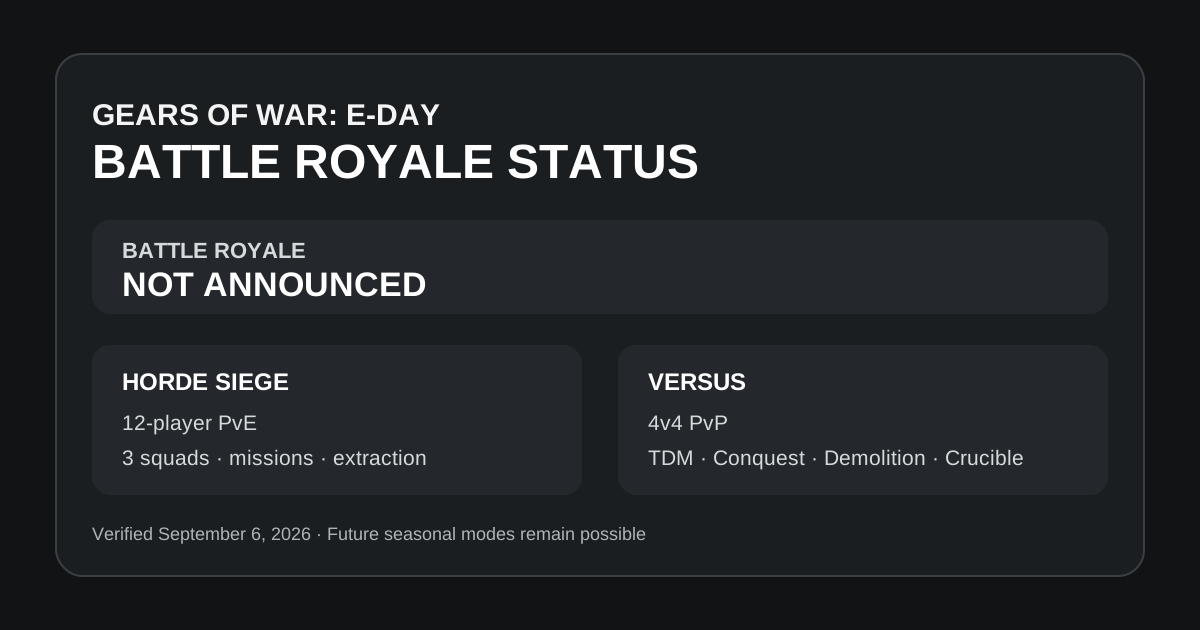
As of September 6, 2026, the reviewed official sources do not announce a battle royale mode. They also do not announce a free-roam multiplayer mode, extraction-only PvP mode, or a separate traditional 50-wave classic Horde playlist outside the documented Horde Siege structure.
That does not mean those ideas can never appear in post-launch updates. The Coalition has already promised additional modes across five multiplayer seasons. It only means they should not be presented as launch features until they are officially named.
Gears E-Day game modes FAQ
What are the main Gears E-Day game modes?
The three main pillars are Campaign, Horde Siege, and Versus. Boot Camp, Combat Training, and Player vs Bot support learning and practice around those pillars.
How many players can play Campaign?
Campaign supports solo play, two-player split-screen on console, and up to four-player online co-op.
How many players are in Horde Siege?
Horde Siege supports 12 players, arranged as three four-player COG squads on the same larger battlefield.
What are Blitz, Siege and Horde?
They are the three main Horde Siege mission playlists. Blitz is shortest, Siege is the standard mission format, and Horde is a 10-wave defensive format that can last close to an hour.
What are the four launch Versus modes?
Team Deathmatch, Conquest, Demolition, and Crucible. All four are designed for 4v4 play.
Does E-Day have Ranked multiplayer?
Yes. Ranked and Social playlist structures are confirmed for Versus. Social also includes Quickplay, Player vs Bot, featured experiences, and limited-time modes.
Does E-Day have a battle royale mode?
No battle royale mode is listed in the official launch multiplayer information checked on September 6, 2026.
Is Combat Training the same as Boot Camp?
No. Boot Camp is the short tutorial course. Combat Training uses a multiplayer map, allows broader weapon and movement practice, can spawn short Locust encounters, and supports four-player co-op.
Bottom line
Gears of War: E-Day is built around Campaign, Horde Siege, and Versus. Campaign delivers the story solo or in co-op. Horde Siege expands Gears PvE into 12-player, multi-squad missions across larger Kalona battlefields. Versus keeps PvP focused at 4v4 with fair starting equipment and four launch modes: Team Deathmatch, Conquest, Demolition, and Crucible.
The rest of the menu makes more sense once you understand that hierarchy. Blitz, Siege, and Horde are Horde Siege playlists. Ranked and Social organize Versus. Boot Camp, Combat Training, and Player vs Bot exist to help you practice. That separation gives E-Day a broad launch lineup without turning every menu label into a completely separate game mode.