No — Gears of War: E-Day is not being presented as a traditional open-world game. The clearest official campaign preview calls the story linear, but it also confirms that parts of Kalona open up, that a tourist pamphlet becomes an in-game map, and that at least one optional side mission lets Bravo Squad stop to help another team before continuing the main objective.
That makes the best description more specific than either “open world” or “fully linear corridor shooter.” E-Day appears to use a structured, story-driven campaign with broader exploration inside selected areas, plus much larger mission spaces in Horde Siege. The game gives players more room to move, flank, explore, help other squads, and use optional routes without turning Kalona into one seamless free-roam sandbox.
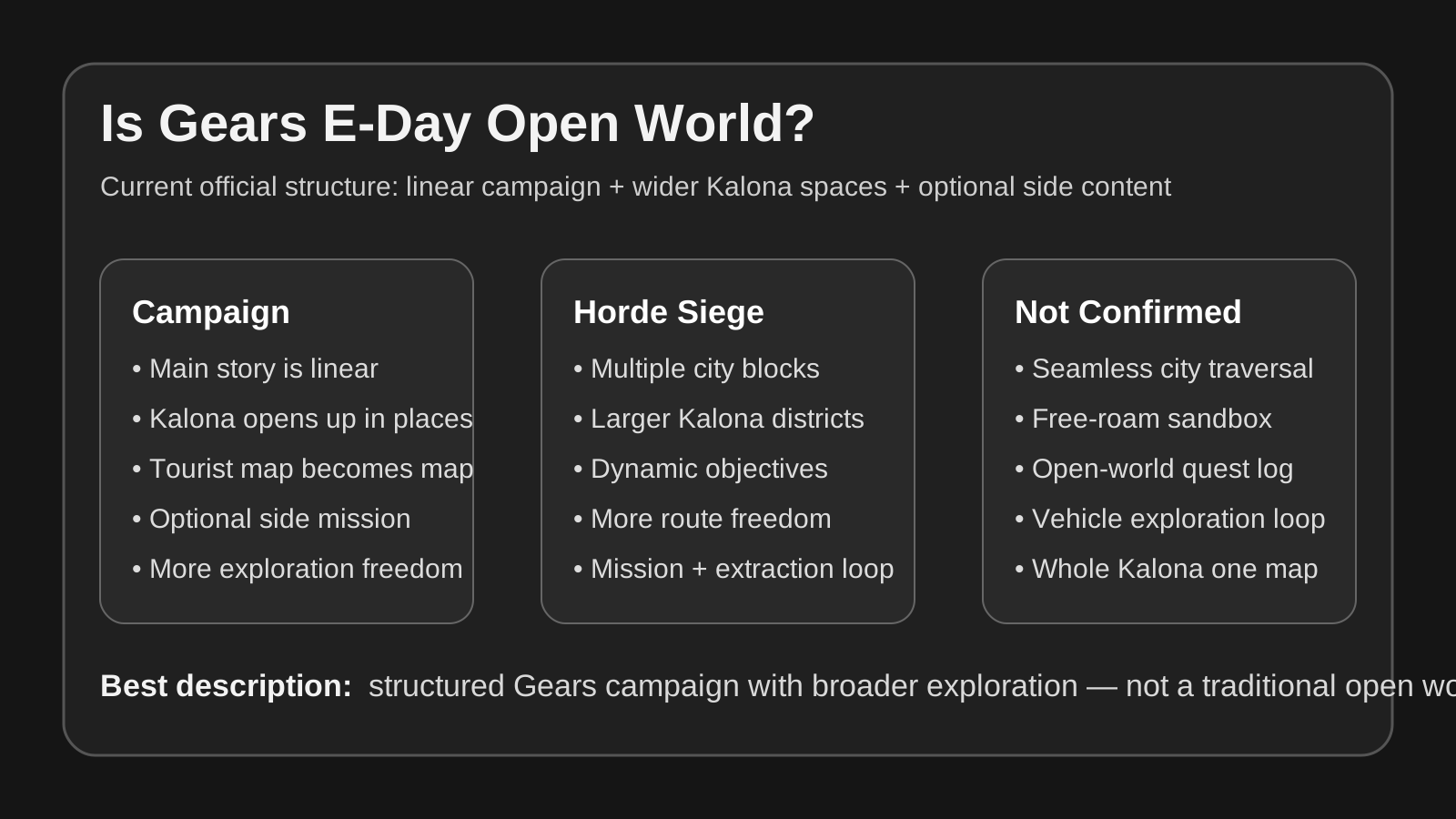
Is Gears E-Day officially open world?
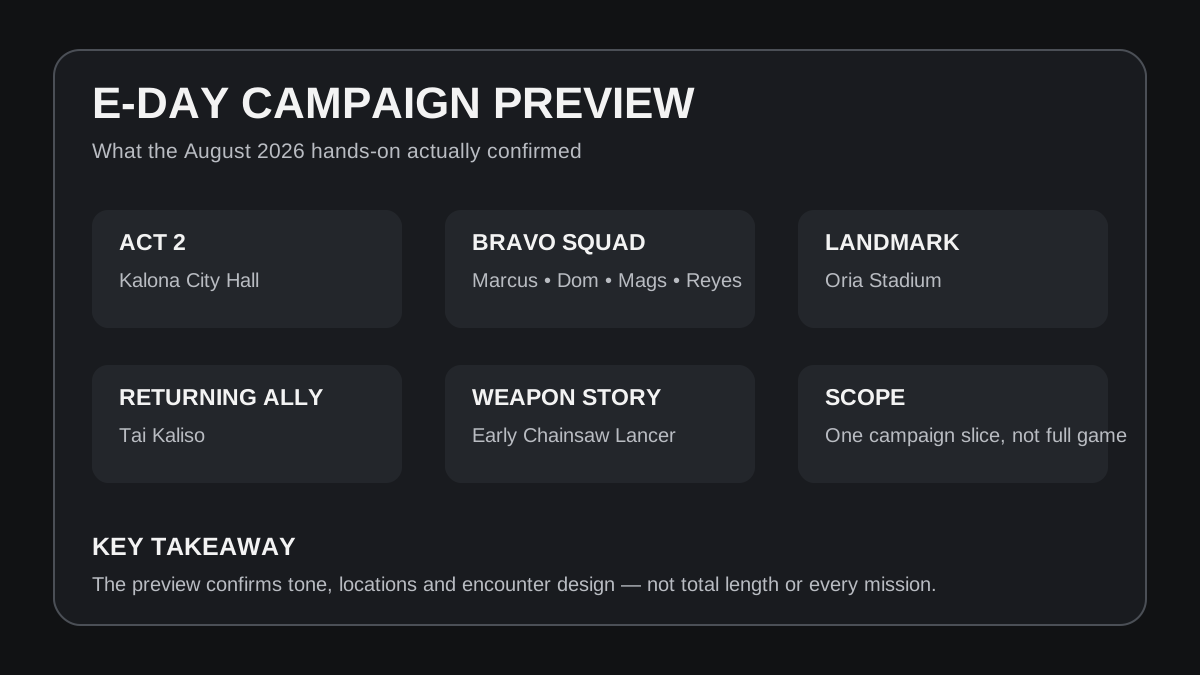
No official Xbox or Gears source currently describes Gears of War: E-Day as an open-world game. More importantly, the August 25 Xbox Wire campaign hands-on gives us a direct description of the story structure: it calls the campaign an “otherwise linear story” while discussing an optional Chapter 2 side mission.
That wording settles the central SEO question better than earlier speculation. The campaign can open up in places without becoming a GTA-style or RPG-style open world. A linear main story can still include wider hubs, optional objectives, branching routes, temporary exploration spaces, side encounters, and a map screen.
The official preview shows exactly that kind of hybrid structure. Bravo Squad moves through Kalona toward clear military objectives, but certain sections let the player explore more freely before rejoining the main path.
For the city itself, see the Kalona location guide. For the full story setup, use the Gears E-Day story guide.
What does “Kalona starts to open up” actually mean?
The phrase comes directly from Xbox Wire’s August 25 hands-on. During Act 2, Bravo Squad obtains a tourist map of Kalona. That tourist pamphlet becomes the player’s in-game map as the team moves toward a rail station.
The preview then says that Kalona starts to open up. That is important, but it should not be exaggerated.
What it confirms:
- the player can use an actual map of the city during campaign play;
- some campaign spaces are wider than a single corridor;
- the city supports exploration around military objectives;
- Bravo Squad can encounter activity involving other COG squads;
- side content can appear before the player returns to the main objective.
What it does not confirm:
- the entire city is seamless;
- every district can be revisited at any time;
- players can ignore the campaign and free-roam indefinitely;
- Kalona has a traditional open-world quest log;
- there is a vehicle-based exploration loop;
- every visible building is enterable.
This distinction is the key to describing E-Day accurately before launch.
Does Gears E-Day have side missions?
Yes. Xbox Wire specifically describes an optional side mission in Chapter 2. Bravo Squad can stop and help another team with a problem before continuing toward its primary objective.
This is one of the strongest pieces of evidence that E-Day has more optional structure than a purely fixed sequence of encounters. The side mission is not presented as mandatory, and the preview uses it as an example of how the city feels like a larger ongoing battle rather than a path built only around Marcus and Dom.
That does not mean E-Day has dozens of RPG quests. The official material has confirmed at least one optional side mission, not a complete side-quest system with quest chains, collectible contracts, faction reputation, or level-gated activities.
The safe conclusion is:
Optional campaign content exists, but the scale of the side-mission system is not yet fully published.
Is the main campaign still linear?
Yes, according to the current official preview. The August 25 Xbox Wire article explicitly refers to the campaign as an otherwise linear story.
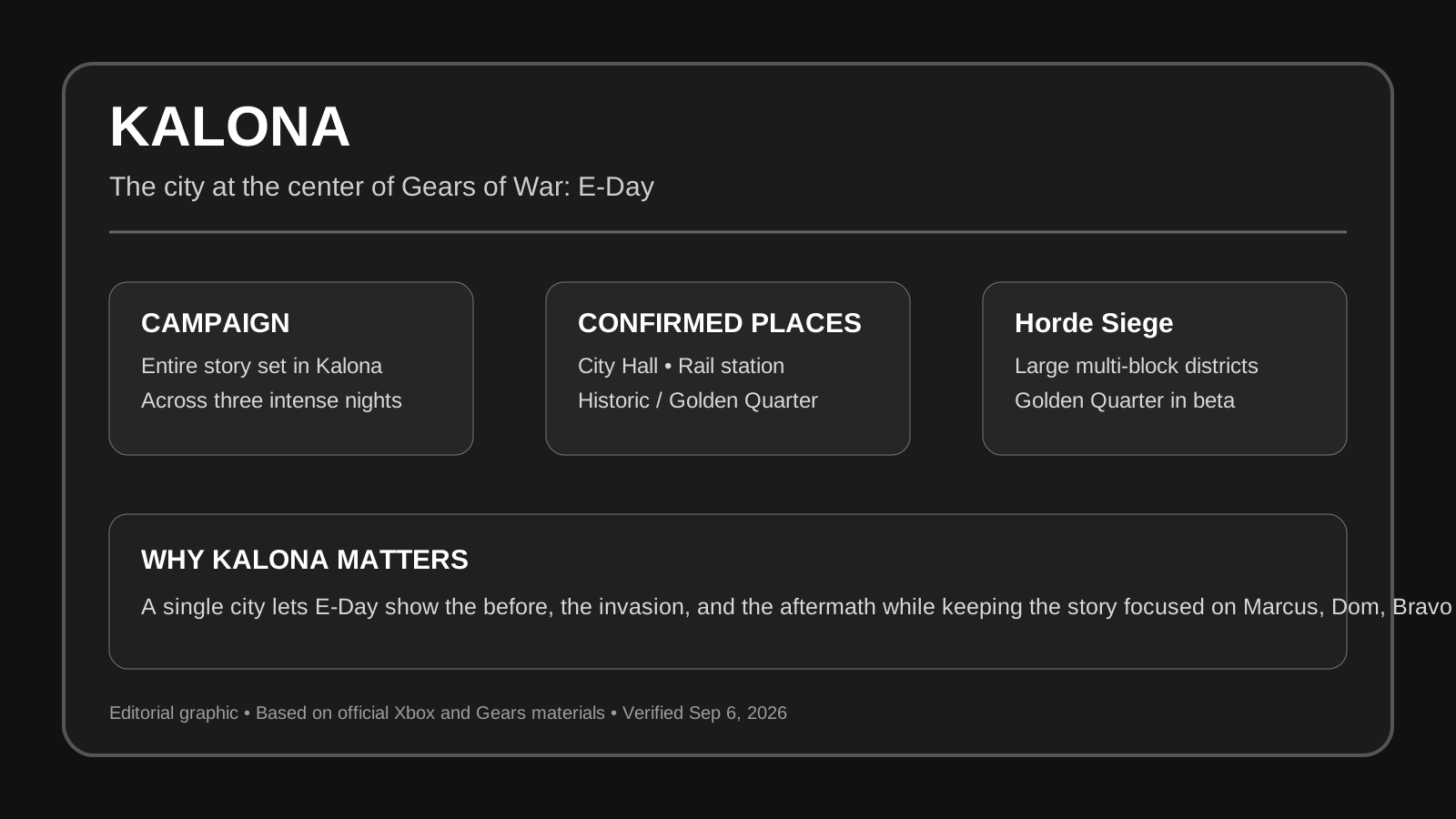
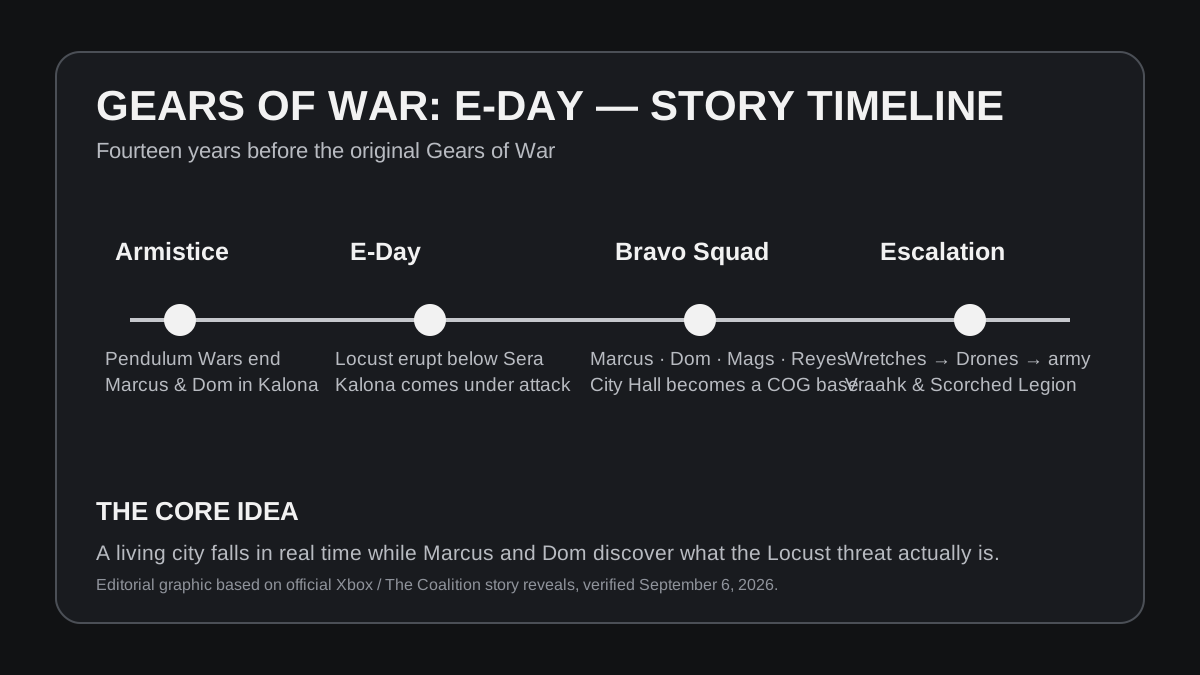
That fits the design goals The Coalition discussed in the September 4 Official Xbox Podcast. The studio says the entire game is set in Kalona because it wanted an intimate battle inside the much larger catastrophe of Emergence Day. Rather than sending Marcus and Dom across many regions of Sera, the campaign follows one city as it deteriorates over a few days.
This single-city focus can create a strong sense of continuity without requiring a conventional open world. Players can revisit ideas, neighborhoods, and landmarks as the invasion worsens. The Coalition also says that Kalona’s landmarks change as the campaign progresses, helping the city feel like a character rather than a static backdrop.
That is a different design goal from unrestricted free roaming. The point is to make the player understand and care about Kalona while moving through a controlled story arc.
Can you explore Kalona?
Yes, exploration is clearly part of the design. The September 4 podcast goes beyond simply calling Kalona a setting. Campaign Design Director Raul Figueroa explains that the team wanted players to connect with the city by exploring it and then watch it fall apart as the campaign continues.
This is one of the strongest pieces of evidence that the campaign gives players room to look around, understand the city, and experience its landmarks beyond a narrow combat lane.
Still, “exploration” does not equal “open world.” Many linear games have explorable spaces, hubs, alternate paths, optional rooms, side objectives, and map-driven navigation. E-Day currently appears closer to that model.
The new movement system supports this design. Jumping, climbing, mantling, sliding, cover gaps, and more vertical routes give players additional ways to move through combat spaces. The Gears E-Day movement guide covers those mechanics in detail.
How does the tourist map work?
The preview gives us a surprisingly concrete answer. Bravo Squad picks up a tourist pamphlet of Kalona, and that real-world-style tourist guide becomes the in-game map.
The choice fits the story. Emergence Day has just begun; the COG does not have a polished modern battlefield UI prepared for an invasion nobody expected. Marcus and his squad are improvising with whatever civilian resources are available.
From a gameplay perspective, the tourist map proves that navigation matters enough for the game to provide a map interface in at least some campaign sections. It also supports the idea that the player is moving through broader city spaces rather than simply following one hallway at a time.
It does not, by itself, prove that the entire map is accessible simultaneously.
Why E-Day can feel open without being open world
There are several reasons players may describe the game as feeling more open than older Gears campaigns.
First, Kalona itself is designed as a real city with multiple districts, recognizable landmarks, military activity, civilians, and fighting happening beyond Bravo Squad’s immediate position. Xbox Wire notes that combat can be heard and seen across distant streets, buildings, and the sky while other COG teams handle separate assignments.
Second, modernized movement gives the player more route choice. Vertical paths, jumpable objects, cover gaps, slides, and mantles can make one combat arena feel less rigid even if the level itself remains part of a linear campaign.
Third, the optional Chapter 2 mission creates a meaningful decision inside the main story path. You are still advancing toward a defined destination, but you can stop and respond to another squad first.
Finally, the entire story staying in Kalona means the city can develop spatial identity. A place seen early in the campaign may look different later as the invasion progresses. That repeated relationship with one city can create an open-world-like sense of place without requiring unrestricted travel.
What about Horde Siege — is that open world?
Horde Siege is even larger, but it still should not be called open world.
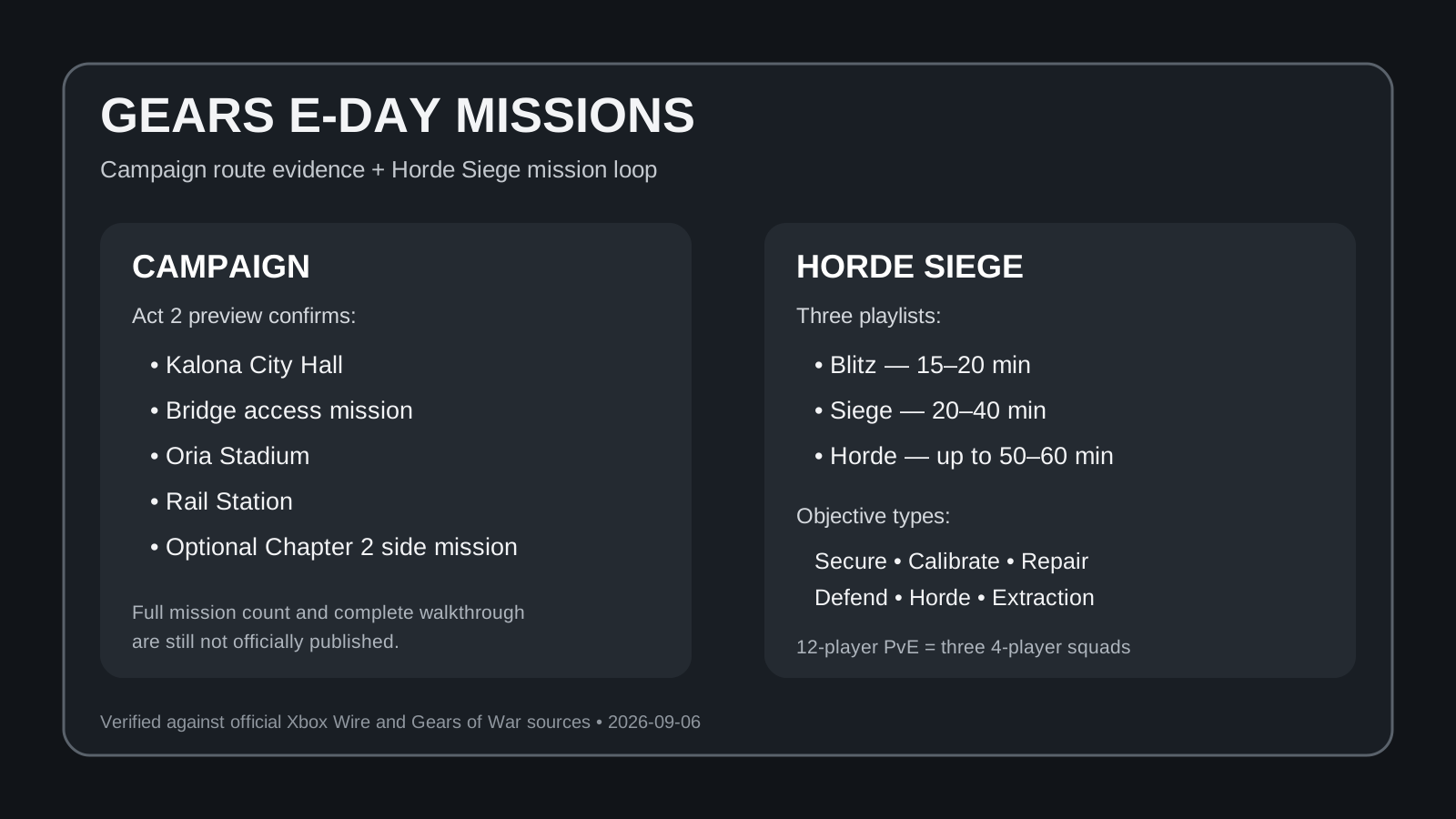
The official Multiplayer Deep Dive describes 12-player Horde Siege as a mission-based PvE mode where three squads operate at the same time on larger maps set in Kalona. Each map covers multiple city blocks, and the developers explicitly say there is more movement freedom and more choice in how a squad approaches its assigned mission.
Players can move across the battlefield, collect Energy, react to changing objectives, use fortifications or equipment left behind by other squads, and eventually complete a final fight and extraction.
That can feel much more open than classic Horde. But the mode still has a clear structure:
- squads deploy into a defined map;
- each squad receives a mission;
- objectives change during the match;
- the battle culminates in a final encounter;
- squads extract from the battlefield.
That is a large persistent mission space, not an open-world game mode.
The Horde Siege guide covers the mode’s full objective, class, Energy, and extraction loop.
How big are the Horde Siege maps?
The Coalition says each Horde Siege map spans multiple city blocks inside Kalona’s sprawling districts. These maps are larger than any Horde maps the studio has made before and provide more movement space and more combat opportunities.
At launch, the game is planned to include three Horde Siege maps showing different districts of Kalona, with additional maps planned after launch.
The beta featured the Golden Quarter, described as a historic district of the city. This gives players a useful reference point: Horde Siege is not one giant recreation of all Kalona, but separate large-scale battlefield maps drawn from different areas of the same city.
That structure is another reason “open world” is the wrong label even though the maps are much bigger.
Does the whole game use one continuous Kalona map?
There is no official confirmation that Campaign, Horde Siege, and Versus all share one seamless physical map.
They all use Kalona as their broader setting, and multiplayer maps represent specific districts or locations around the city. But sharing a fictional city does not mean every mode loads the exact same continuous world.
The official material instead points toward mode-specific spaces inside one consistent city setting:
- Campaign follows Bravo Squad through Kalona across three nights.
- Horde Siege uses large multiple-city-block maps from different districts.
- Versus uses six smaller competitive maps located in and around Kalona.
That shared setting creates continuity without requiring a universal open-world map.
Gears E-Day open world FAQ
Is Gears E-Day open world?
No. The current official campaign preview describes the story as linear. Some sections of Kalona open up and allow more exploration, but the game is not being marketed as a traditional open-world title.
Does Gears E-Day have side quests?
At least one optional side mission is officially confirmed in Chapter 2. The full number and structure of optional missions have not been published.
Can you explore Kalona?
Yes. The Coalition explicitly discusses allowing players to explore Kalona and connect with the city. The extent of free exploration varies by campaign section and has not been described as unrestricted free roam.
Does Gears E-Day have an in-game map?
Yes. In the campaign preview, Bravo Squad picks up a tourist map of Kalona that becomes the player’s in-game map.
Is Horde Siege open world?
No. Horde Siege uses very large maps covering multiple city blocks and allows significant movement freedom, but it is still structured around missions, objectives, final battles, and extraction.
Is Kalona one seamless map?
That has not been confirmed. Campaign, Horde Siege, and Versus all use Kalona as a setting, but current official material describes separate campaign areas and mode-specific maps rather than one universal seamless world.
Bottom line
Gears of War: E-Day is not a conventional open-world game. The current official evidence points to a linear main campaign that sometimes opens into broader Kalona spaces, gives the player a city map, supports exploration, and includes at least one optional side mission.
That is a meaningful evolution for Gears. The game can provide more player choice, verticality, optional content, and spatial continuity without abandoning the focused story structure that defines the series.
Horde Siege pushes scale even further with multiple-city-block maps and three squads sharing one changing battlefield, but it remains a mission-and-extraction mode rather than free roam.
For now, the most accurate description is: a structured Gears campaign with wider exploration and optional content — not a traditional open world.