The Gears E-Day Locust are no longer just a vaguely “reimagined” version of the Horde. By September 2026, The Coalition and Xbox have named the campaign’s central Locust commander, confirmed his elite legion, and explained how several classic enemies have been rebuilt for E-Day’s new combat sandbox.
The biggest new addition is Vraahk, a Blight Commander who was injured during the Lambent War and now leads an elite force called the Scorched Legion. Alongside that new campaign threat, E-Day brings back Wretches, Drones, Seeders, Boomers, Reavers, Corpsers, Brumaks, and other creatures from the Hollow with changed behaviors, tougher encounter roles, and a more brutal first-contact presentation.
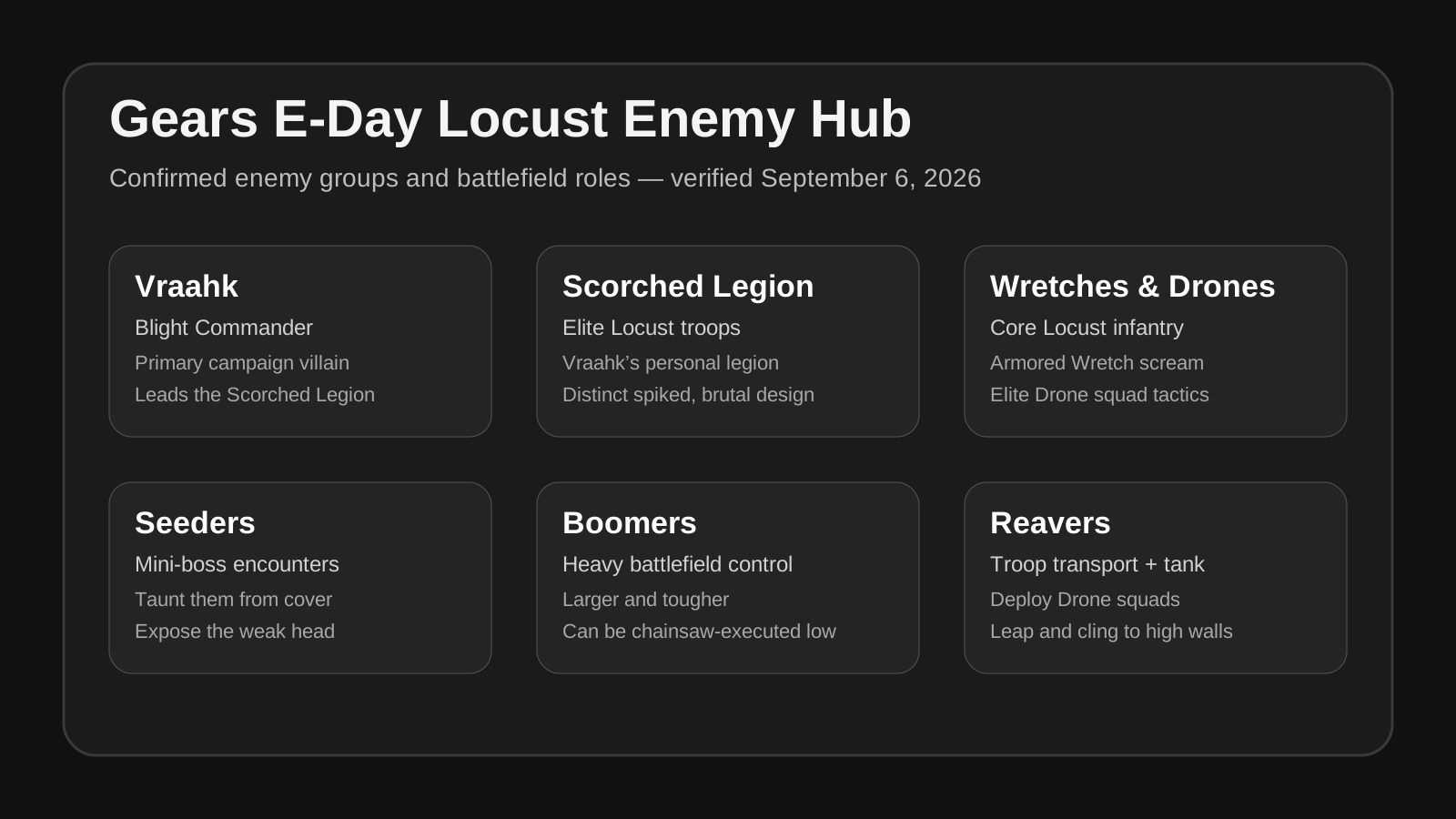
This page is the enemy hub for confirmed Locust information. It separates officially named enemies and behaviors from things that are still only visible in trailers, previews, or community speculation.
Who is Vraahk?
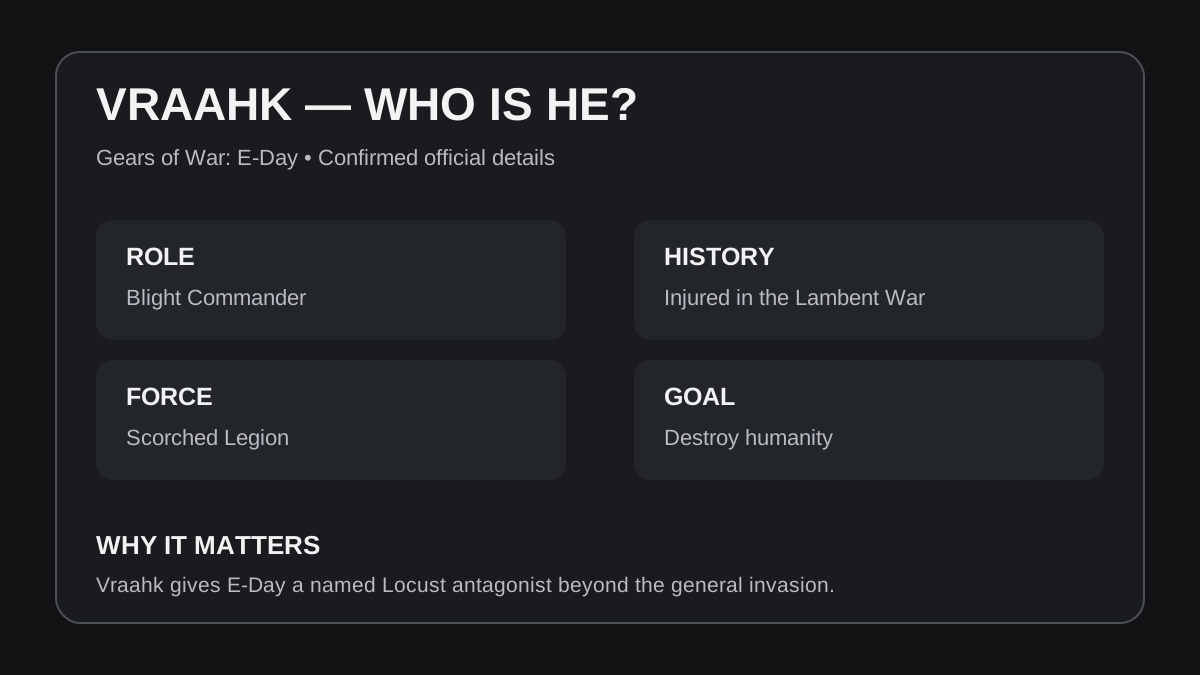
Vraahk is the major Locust villain currently confirmed for the Gears E-Day campaign. In the September 4 Official Xbox Podcast, campaign leads described him as a Blight Commander who was wounded in the Lambent War before coming to the surface with the goal of destroying humanity.
That background matters because E-Day is not presenting the Locust as an unknown swarm with no hierarchy. Vraahk gives the opening invasion a visible command structure and a personal threat that Marcus, Dom, and Bravo Squad can encounter as the campaign progresses.
The developers also describe Vraahk as embodying the brutality of the Locust. His visual identity and battlefield presence are reflected in the elite soldiers around him rather than being confined to one boss encounter.
For a focused character breakdown, see the Vraahk guide.
What is the Scorched Legion?
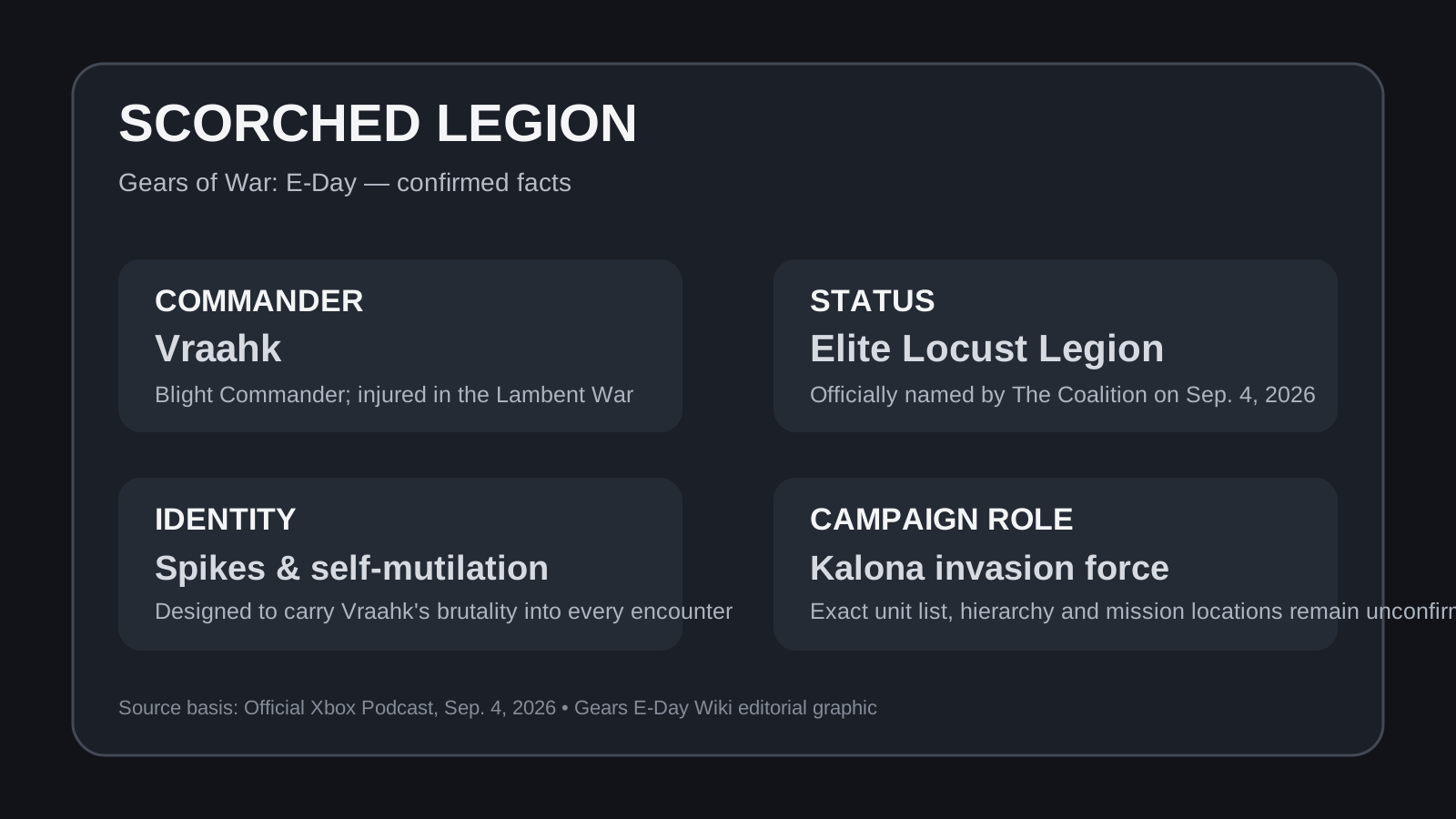
The Scorched Legion is Vraahk’s elite Locust force. This is now an official name, not a community nickname.
The September 4 Xbox discussion identifies the Scorched Legion as Vraahk’s personal legion and describes the units as carrying the same brutal identity as their commander. Their visual design includes spikes and signs of self-mutilation, reinforcing the idea that players can feel Vraahk’s influence even when he is not personally on the battlefield.
That makes the Scorched Legion important for more than lore. In practical encounter terms, the group gives The Coalition a way to distinguish ordinary Locust pressure from elite campaign threats without turning every difficult enemy into a unique boss.
A complete Scorched Legion roster has not been published yet. We know the legion exists and that it contains elite units, but we do not yet have a developer-issued database naming every rank, weapon loadout, health value, or campaign appearance.
Confirmed Gears E-Day Locust enemies
The current official material supports a much stronger enemy list than it did in early August.
| Enemy or group | Confirmed role or behavior | Where it matters |
|---|---|---|
| Vraahk | Blight Commander and major campaign villain | Campaign story |
| Scorched Legion | Elite Locust force led by Vraahk | Campaign story and elite encounters |
| Wretches | Rebuilt core enemy; Armored Wretches can use a disorienting scream | Campaign and broader combat sandbox |
| Drones | Multiple varieties, including elite units with tougher tactics and loadouts | Core infantry encounters |
| Seeders | Return as mini-bosses; players must draw them out and expose a weak head | Larger combat encounters |
| Boomers | Bigger and tougher; can be Lancer-chainsaw executed at low health | Heavy battlefield pressure |
| Reavers | Can transport Drone squads, then remain as mobile heavy threats | Dynamic multi-layer encounters |
| Corpsers | Large Locust threat used in Horde Siege Invasion Events | Multiplayer PvE |
| Brumaks | Large Locust threat used in Horde Siege Invasion Events | Multiplayer PvE |
This is still not the full launch roster. The Coalition explicitly says there are additional enemies, including new creatures from the Hollow that have been enslaved by the Locust and unleashed on the surface of Sera.
Wretches are more than disposable rush enemies
Wretches are one of the clearest examples of how E-Day is changing familiar Locust behavior.
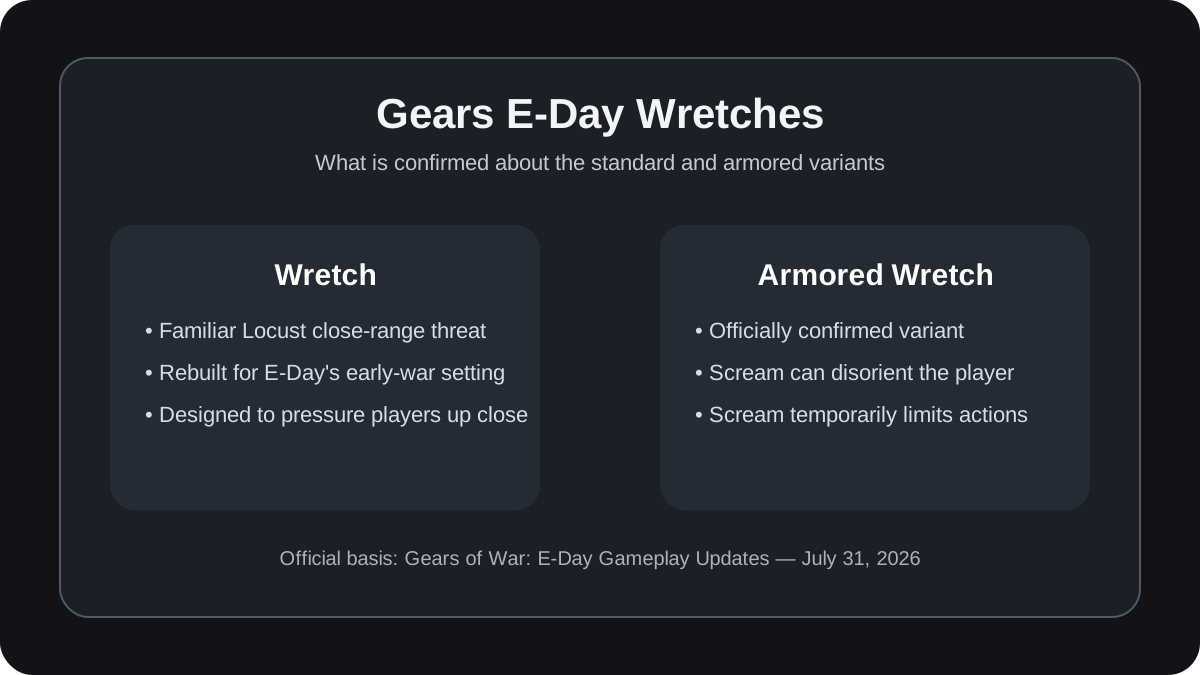
Earlier developer discussion framed the first encounters around more primitive-looking or less-armored Wretches, helping sell the feeling that Marcus and Dom are seeing these creatures at the start of Emergence Day. The July 31 Gameplay Updates post adds a more concrete combat change: Armored Wretches can catch the player in a scream that disorients them and restricts their actions.
That turns a familiar fast melee enemy into a control threat. A Wretch is no longer dangerous only because it closes distance quickly; an armored variant can interfere with your ability to respond while other Locust units are pressuring the squad.
The developers have not published a complete Wretch taxonomy, so terms such as “Feral Wretch” should only be used when supported by a direct source or in-game naming. What is safe to say is that E-Day has multiple Wretch presentations and that Armored Wretches have a specific disruption mechanic.
Drones are built around squad tactics
Drones come in multiple varieties, and elite units can use stronger tactics and loadouts. The July gameplay article emphasizes combinations of enemies rather than isolated stat upgrades.
That matters for Gears combat. A Drone is most threatening when its weapon, position, and role work with another unit. One enemy may pin the player in cover while another pushes a flank or forces movement. Elite Drone variants are therefore part of an encounter system rather than just a higher-health copy of a basic soldier.
The exact list of Drone classes is not yet public. Avoid turning armor differences or weapons visible in footage into official class names until The Coalition labels them.
Seeders return as mini-bosses
Seeders are no longer described only as Nemacyst-launching battlefield support. In E-Day they can function as mini-boss encounters.
The developer explanation gives this fight a specific mechanic: players need to get close enough to taunt a Seeder out of its hole. When it flips over, its vulnerable fleshy head becomes exposed.
That creates an encounter built around positioning and risk rather than simply dumping ammunition into a large target from long range. It also supports E-Day’s broader design goal of making classic Locust enemies recognizable while giving them fresh behaviors.
Boomers are tougher, but can be finished aggressively
Boomers return as heavier space-control enemies. The Coalition says they are larger and tougher than before, capable of absorbing significant damage and dominating an area.
E-Day also gives squads a more aggressive finish condition. When a Boomer reaches low health, players can execute it with the Lancer chainsaw. A coordinated team can therefore shorten a prolonged heavy-enemy fight by creating an opening for a close-range execution.
That does not mean chainsawing a Boomer is always safe. The confirmed point is simply that the mechanic exists; exact timing, difficulty scaling, and whether every Boomer variant behaves identically should be judged from the final game.
Reavers can change the shape of a battle
Reavers are one of the most mechanically interesting returning threats described so far.
They can act as troop transports, delivering a squad of Drones into combat. If they stay in the fight, they become heavy mobile threats themselves. The developer post says Reavers can leap and cling to high walls, firing from above and changing the battlefield’s vertical pressure.
That makes a Reaver encounter potentially multi-stage. The threat is not only the creature itself: it can introduce infantry, reposition, and create high-angle fire that invalidates cover which was safe moments earlier.
This fits E-Day’s wider emphasis on movement, verticality, destructible spaces, and more dynamic combat arenas.
Corpsers and Brumaks in Horde Siege
The multiplayer side adds even larger Locust pressure through Invasion Events in Horde Siege.
The official multiplayer deep dive names Corpsers and Brumaks as examples of large threats that can appear during these events. Because Horde Siege places three COG squads on the same larger Kalona battlefield, a major creature can affect more than one local firefight and can interfere with objectives or extraction.
These appearances should not automatically be treated as evidence for the campaign boss list. They are confirmed Horde Siege threats. Campaign appearances need their own campaign evidence.
For the full 12-player PvE structure, see the Horde Siege guide.
Why the Locust feel different in E-Day
The redesign is not only cosmetic. E-Day is set at the beginning of the surface war, when Marcus, Dom, and the people of Kalona are encountering the Locust as a terrifying new reality.
That first-contact perspective lets The Coalition reintroduce familiar enemies with more horror and uncertainty. Players may recognize a Boomer or Wretch immediately, but the characters in the world do not have years of battlefield knowledge telling them how each enemy works.
At the same time, the gameplay sandbox has been rebuilt. The July update explains that enemy variety is meant to create different tactical problems: some units pin players, some force them out of cover, and others mirror COG tactics. The challenge comes from enemy combinations, map layout, weapon choice, and squad decisions, not just from making every Locust absorb more bullets.
What is still unconfirmed?
Even after the September Vraahk reveal, several details remain open:
- The complete launch enemy roster has not been published.
- The full membership and ranks of the Scorched Legion are unknown.
- Vraahk’s complete boss mechanics are not public.
- Not every enemy shown in trailers has an official name.
- A multiplayer Invasion Event does not automatically confirm a campaign boss.
- The new enslaved Hollow creatures have not all been named.
- Final health values, difficulty scaling, weaknesses, and encounter locations will depend on the launch build.
That boundary is important for a wiki. Trailer frames are useful evidence that something appears, but they should not be used to invent names, affiliations, or mechanics.
Gears E-Day Locust FAQ
Who is the main Locust villain in Gears E-Day?
The major named villain currently confirmed is Vraahk, a Blight Commander who leads the Scorched Legion and wants to destroy humanity after coming to the surface.
Is the Scorched Legion an official name?
Yes. The September 4 Official Xbox Podcast directly identifies Vraahk’s elite units as the Scorched Legion. Earlier community usage is no longer the strongest evidence because the name has now been confirmed officially.
Are Wretches in Gears E-Day?
Yes. Wretches return, and Armored Wretches can use a scream that disorients players and limits their actions.
Are Seeders in Gears E-Day?
Yes. Seeders return as mini-boss enemies. The developers describe a mechanic where players draw them out and attack the exposed weak head.
Are Boomers and Reavers confirmed?
Yes. Boomers are described as larger and tougher, with a low-health Lancer execution option. Reavers can transport Drones and can remain in combat as dangerous mobile heavy units.
Are Corpsers and Brumaks in the game?
Both are officially named as large threats in Horde Siege Invasion Events. That confirms them for multiplayer PvE, but it does not by itself define their campaign roles.
Is the full Locust roster known?
No. The Coalition has explicitly indicated there are more enemies and new Hollow creatures beyond the named examples. A complete enemy database has not yet been published.
Bottom line
The Gears E-Day Locust roster now has a much clearer structure. Vraahk is the named Blight Commander at the center of the campaign threat, and the Scorched Legion is his officially confirmed elite force. Classic enemies including Wretches, Drones, Seeders, Boomers, Reavers, Corpsers, and Brumaks return with updated behaviors or encounter roles, while additional enslaved creatures from the Hollow remain to be fully revealed.
The important change from earlier coverage is that E-Day is no longer just promising “reimagined Locust.” The developers have started explaining exactly how those enemies fight, how elite Locust fit into the story, and how different units combine to pressure the player. That makes this enemy hub a stronger foundation for future dedicated pages as The Coalition reveals more of the roster before October 6.